Stop Losing April Leads Before Your Crew Even Gets There
Manual follow-ups are costing you thousands in lost April leads. Discover why responding in 5 minutes converts 100x better, and how automation saves contractors 20+ hours weekly while driving 23% revenue growth.
TL;DR:
You spent real money generating spring leads. The MIT Lead Response Management Study - analyzing more than 15,000 leads and 100,000 call attempts - found that the odds of contacting a lead drop 100 times if you wait 30 minutes instead of calling within 5. HubSpot research found that nearly two-thirds of buyers expect a response within 10 minutes. Yet only 27% of leads ever get contacted at all, per Forbes research. For field service contractors running manual follow-up processes, slow response is not a discipline problem - it is a structural one. This blog covers what the speed gap actually costs, why manual processes cannot close it, and the four-part system that can.
The Lead You Paid For Is Already Calling Someone Else
April is the month most field service contractors spend the most on lead generation. Google Ads, Local Services Ads, Facebook campaigns, direct mail - all of it converges on the spring rush window when homeowners are actively looking for HVAC tune-ups, plumbing inspections, electrical panel checks, and roofing estimates.
According to 99 Calls' analysis of Google Ads data across hundreds of home service businesses, lead costs for home services rose 19% overall in 2024, with HVAC leads averaging $105 each and electrical leads climbing 23% year over year. Google Local Services Ads specifically moved from $50.46 per lead in 2023 to $60.50 in 2024, a 20% increase in a single year. Contractor lead costs on standard services now routinely run $100 to $250 per qualified inquiry, depending on trade and market.
That is real money. When a homeowner submits a form on your website asking for an HVAC estimate at 2 PM on a Tuesday, you have paid somewhere between $60 and $200 for that moment of intent. What happens in the next five minutes determines whether that investment returns anything.
According to the MIT Lead Response Management Study, conducted by Dr. James Oldroyd at MIT's Sloan School of Management and analyzing more than 15,000 leads and 100,000 call attempts across six companies over three years, the odds of contacting a lead drop 100 times if you call 30 minutes later instead of within 5 minutes. The odds of qualifying that lead drop 21 times over the same window. The drop-off is not gradual. It is a cliff.
HubSpot's research on buyer expectations found that nearly two-thirds of buyers - 66% - expect a response within 10 minutes to any marketing, sales, or customer service inquiry. 82% rate immediate response as important or very important when they have a sales-related question. These homeowners are not patient. They submitted your form while simultaneously texting two other contractors.
The LeadProspecting AI analysis of spring lead patterns found that HVAC, plumbing, and electrical companies see lead volume increase two to three times during the spring surge. That multiplier works in your favor only if your follow-up system can match the pace. If it cannot, the surge is filling a competitor's schedule, not yours.
What Slow Follow-Up Actually Costs
The structural problem with manual follow-up is not that contractors do not want to respond quickly. It is that the systems most contractors run make fast response impossible during peak season.
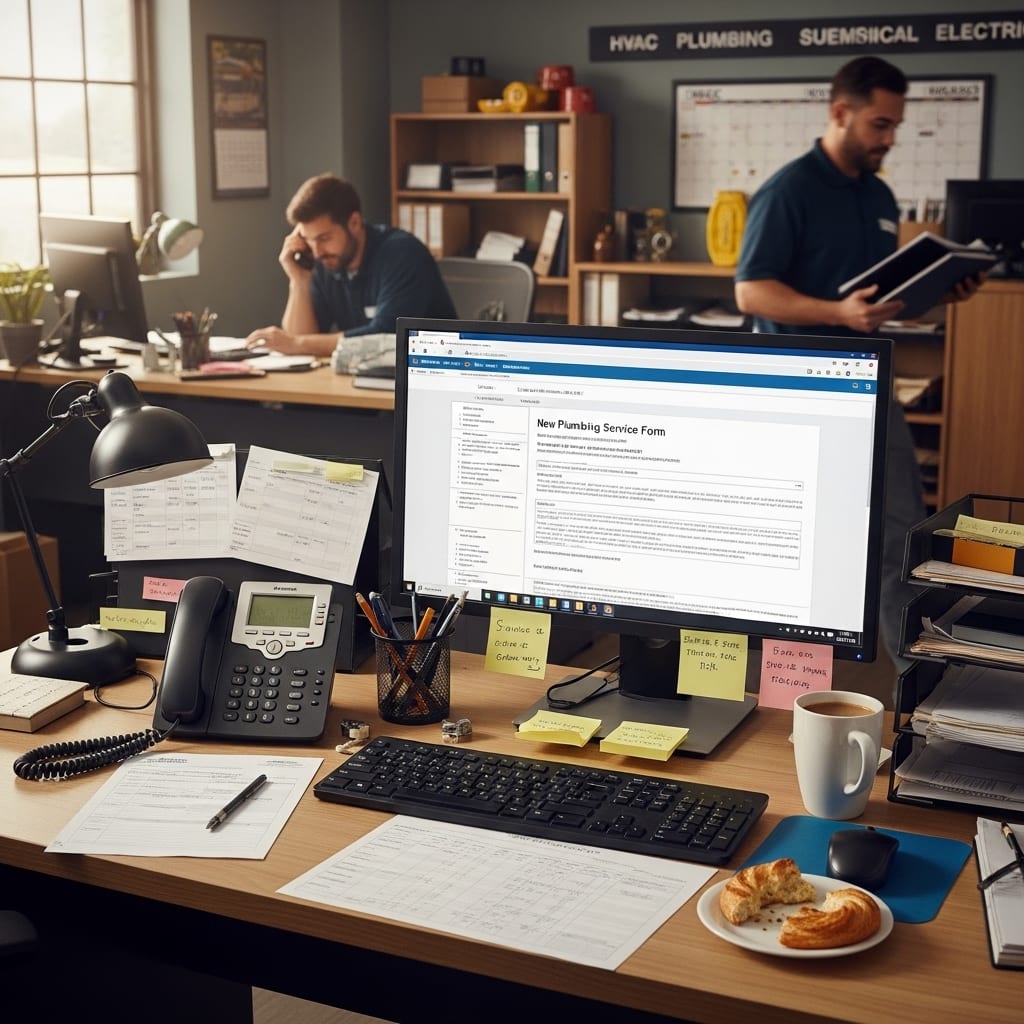
Here is what typically happens. A lead comes in through a website form at 10:30 AM. Your crew is on job sites. Your office admin notices the submission at 11:45 AM, manually enters the contact information into a spreadsheet or notebook, writes a reminder to follow up, and gets pulled into a dispatch call. By 1 PM, someone finally dials the number. By then, the homeowner has already spoken with two competitors - including one who responded automatically within 60 seconds with a text message acknowledging the request and promising a callback.
Forbes research found that only 27% of leads ever get contacted at all, regardless of industry. For contractor-specific businesses, industry data on home improvement companies found that 44% of contractor leads never receive follow-up of any kind. Nearly half of the leads you pay for disappear into the gap between form submission and first response.
The math compounds. Say you generate 80 leads in April at an average cost of $105 each - roughly $8,400 in marketing spend. If 44% receive no follow-up, that is 35 leads that cost you $3,675 and produced nothing. Of the remaining 45 who do get contacted, many are reached an hour or more after submission - which Harvard Business Review research found makes companies 7 times less likely to qualify the lead compared to responding within the first hour. The actual revenue impact of a slow follow-up system across a full spring season is not a minor efficiency gap. It is a significant portion of your marketing investment returning nothing.
The LeadProspecting AI post on the hidden cost of manual lead follow-up covers exactly this dynamic: the dollars contractors spend on lead generation are only as valuable as the speed of the follow-up system behind them. A well-funded campaign with slow follow-up is an expensive way to generate leads for faster competitors.
Why the Five-Minute Window Is Not Negotiable
The research on this is unusually consistent across multiple independent studies spanning nearly two decades.
The MIT Lead Response Management Study established the foundational finding: contact odds drop 100 times between 5 minutes and 30 minutes. Qualification odds drop 21 times over the same window. InsideSales.com's research extended this to show that conversion rates are more than 8 times higher if attempted in the first 5 minutes versus waiting between 5 minutes and 24 hours - and that only 0.1% of inbound leads are actually engaged within that window. Nearly every company is losing the race they do not even know they are running.
Velocify's research found that responding within one minute of lead submission increases conversion rates by 391%. That number matters for contractors because most spring leads are submitted during business hours - homeowners researching service options during their lunch break or after noticing a problem that morning. They are not browsing. They are buying.
The behavioral reason behind these numbers is straightforward. The moment a homeowner submits a service request, their attention and intent are at their highest. They have just articulated a problem and taken an action. Every minute that passes creates space for doubt, distraction, and competitive alternatives. A contractor who responds in two minutes is not just faster than one who responds in an hour - they are reaching a fundamentally different psychological state in the customer.
78% of buyers go with the first company that responds to their inquiry, per Vendasta and Lead Response Management research. In a market where platforms like Angi and Thumbtack sell the same lead to three to five contractors simultaneously, first-responder advantage is not a nice-to-have. It is the decisive factor.
Why Manual Follow-Up Cannot Close the Gap
Understanding the five-minute window is not the problem. Most contractors who read this already believe it. The problem is that manual follow-up processes are structurally incapable of consistently hitting that window during peak season.
Think through what manual follow-up actually requires during a busy spring day. Someone has to notice the lead came in. That person has to be available to act on it. They have to manually enter the contact information somewhere. They have to decide who should follow up. They have to actually make contact - while simultaneously handling dispatch calls, scheduling changes, customer complaints, and supplier questions. And then they have to track whether contact was made and follow up again if not.
Field service operators switching from manual to integrated scheduling systems report that spreadsheets and disconnected tools create exactly this bottleneck: information that should trigger an immediate action instead waits for a human to notice it, process it, and act on it - steps that each introduce delay and failure points.
The failure rate under manual systems is not a reflection of effort or competence. It is a reflection of system design. A crew running 15 to 20 jobs per week in spring is not failing to follow up on leads because they do not care. They are failing because the manual system cannot handle the volume and speed simultaneously. The comparison of manual versus automated scheduling in field service makes the same point: manual processes that work fine at low volume collapse predictably under spring demand.
The Four-Part Follow-Up System That Works
The solution does not require enterprise software or a dedicated sales team. It requires four process changes that can be implemented with a single integrated platform.
1. Instant Automated Acknowledgment
The moment a lead submits a form, an automated text message goes out within 60 seconds. Not a robotic script - a clear, professional message: "Thanks for reaching out - someone from our team will call you within the next 30 minutes. What's the best number to reach you?" This accomplishes two things immediately. It tells the homeowner their request was received, which prevents them from resubmitting with a competitor. And it sets an expectation that creates a window for your team to follow up with a live call.
The text channel matters here specifically. Industry research on home improvement lead contact rates found that texting achieves a 98% open rate compared to 20% for email, and 69% of homeowners prefer text as the initial contact method from an unfamiliar company. Your automated acknowledgment in SMS is reaching them where they already are.
2. Smart Lead Routing to the Right Person
After the automated acknowledgment, the lead needs to reach a human quickly. A lead routing system assigns incoming requests to the next available dispatcher, technician, or salesperson based on current schedule and location - without anyone having to manually check a spreadsheet or make a phone call to figure out who is free.
Emergency dispatch research shows that during peak season, the gap between a lead that converts and one that does not often comes down to whether someone with authority to book a job reaches the customer within the response window. Routing ensures that happens automatically rather than relying on whoever happens to notice the lead first.
3. Escalation if the Window Is Missed
Even with automation, things get missed. A persistent follow-up sequence handles this. If no one on your team makes live contact within 10 minutes of the automated acknowledgment, the system sends an internal alert. If the customer has not responded to the text within two hours, a follow-up message goes out. If no contact is made by end of day, a task is created for first thing the following morning.
InsideSales.com's research found that the average sales rep makes 1.3 contact attempts before moving on. The data on conversion shows that meaningful contact often requires five or more attempts. A persistent follow-up sequence automates that persistence so it happens consistently regardless of how busy the spring schedule gets.
4. Every Interaction Logged Against the Lead
When a technician calls the lead, that call should log automatically in the customer record. When a text is sent, it should appear in the same thread. When a job is booked, it should connect back to the original lead source. This trail serves two purposes. First, it ensures nothing falls through the cracks between team members - the dispatcher who took the call can see what the technician already told the customer. Second, it gives you the data to measure what is working: which lead sources are converting, at what response times, and with what lag between submission and booked job.
Field service businesses that track these metrics are able to identify within a single season where their follow-up process is breaking down and correct it before the next peak. Businesses running manual systems typically cannot see the failure at all - they only notice the revenue did not materialize.
The Simplest Diagnostic You Can Run This Week
You do not need new software to start measuring your current follow-up performance. Pull the last 30 days of leads from whatever system you use. For each one, record: the time the lead came in, the time of first contact attempt, whether contact was made, and whether a job was booked.
Calculate your average time to first response. If it is over 30 minutes, you are operating in a range where MIT research found contact odds are 100 times lower than sub-5-minute response. If it is over one hour, you are in the range where HBR found qualification rates drop to one-seventh of best-in-class.
Calculate what percentage of your leads received no follow-up contact at all. If that number is above 20%, the structural gap in your follow-up process is costing you more per month than most software subscriptions would.
That number is your baseline. Everything you implement from here should move it.
Ready to Stop Leaving Lead Investment on the Table?
The leads you generate in April are worth exactly what your follow-up system can recover from them. A marketing budget that consistently produces leads at $100 to $200 each deserves a follow-up system that reaches those leads within five minutes - not when someone happens to notice the form submission between dispatch calls.
FieldServ AI connects lead capture, automated acknowledgment, smart routing, and customer history in one platform used for scheduling, dispatch, and invoicing. When a lead comes in, the system responds immediately, routes to the right person, and escalates if the window is missed - without adding a single manual step to your team's workflow.
Start your free 21-day trial and configure your lead follow-up sequence before the next spring rush week starts.
Frequently Asked Questions
How quickly do I actually need to respond to a lead?
Within five minutes is the research-backed standard. The MIT Lead Response Management Study found that contact odds drop 100 times between the five-minute and 30-minute mark. Velocify's research found that responding within one minute increases conversion rates by 391%. In practice, an automated acknowledgment text within 60 seconds plus a live call within 15 to 30 minutes is a realistic and effective standard for most contractor operations.
What if my team is on job sites and cannot respond immediately?
That is exactly why automation matters. The automated acknowledgment handles the first critical 60 seconds - it tells the homeowner their request was received and sets a callback expectation. Your team's live call happens within 15 to 30 minutes, which is well within the window that produces meaningful conversion improvement. The automated response is not a replacement for a human conversation. It is the bridge that keeps the lead warm until a human can get there.
Is following up by text professional for a contractor business?
Yes, and homeowners prefer it. Home improvement industry research found that 69% of homeowners prefer text as initial contact from an unfamiliar service company, and texts achieve a 98% open rate compared to 20% for email. A short, professional text acknowledging the request and setting a callback time is consistently more effective at keeping the lead engaged than either a voicemail or a delayed email.
How do I know if my current follow-up system is actually costing me money?
Track four numbers for 30 days: average time from lead submission to first contact attempt, percentage of leads that receive no contact at all, contact rate (percentage of leads where someone actually spoke with the homeowner), and lead-to-booked-job conversion rate. If your average response time is over 30 minutes or your no-contact rate is above 20%, you have a structural problem that is costing you a measurable percentage of your marketing investment every month.
Can I improve follow-up speed without new software?
You can improve it somewhat. Designating one person specifically responsible for watching for new leads during business hours and assigning them a clear response protocol will reduce your average response time. The limitation is coverage - that person cannot monitor leads during jobs, at lunch, or after hours. And manual systems create a ceiling where response time is bounded by human attention and availability rather than the five-minute standard the research identifies. Software automation removes that ceiling by handling the first 60 seconds regardless of what your team is doing.
Tags
Written by
FieldServ AI Team
Field service management insights from the FieldServAI team.
Related Articles

Field Service Management Software: 6 Fixes for June Revenue Leaks
June is your busiest and leakiest month. Here are 6 field service management software features that stop revenue leaks and keep multi-crew operations profitable.

The August Margin Leak: Why Peak Season Kills Profit
Contractors lose margin in busy months, not slow ones. Here are four peak-season leaks that never reach your revenue report, the math behind them, and why weekly margin review beats a monthly close.

Field Service Management Software: Set It Up in 48 Hours, No IT
Think field service management software needs IT skills? Myth busted. Here's the exact 48-hour, no-code setup plan solo contractors use to go live.
Ready to Modernize Your Field Operations?
FieldServ AI helps service companies streamline scheduling, dispatching, and customer management.
Get Started Free