
May Workforce Burnout: Field Service Management Software Prevents $8K+ Turnover
May burnout costs field service businesses $8K or more per lost employee. Learn how field service management software prevents turnover before it happens.
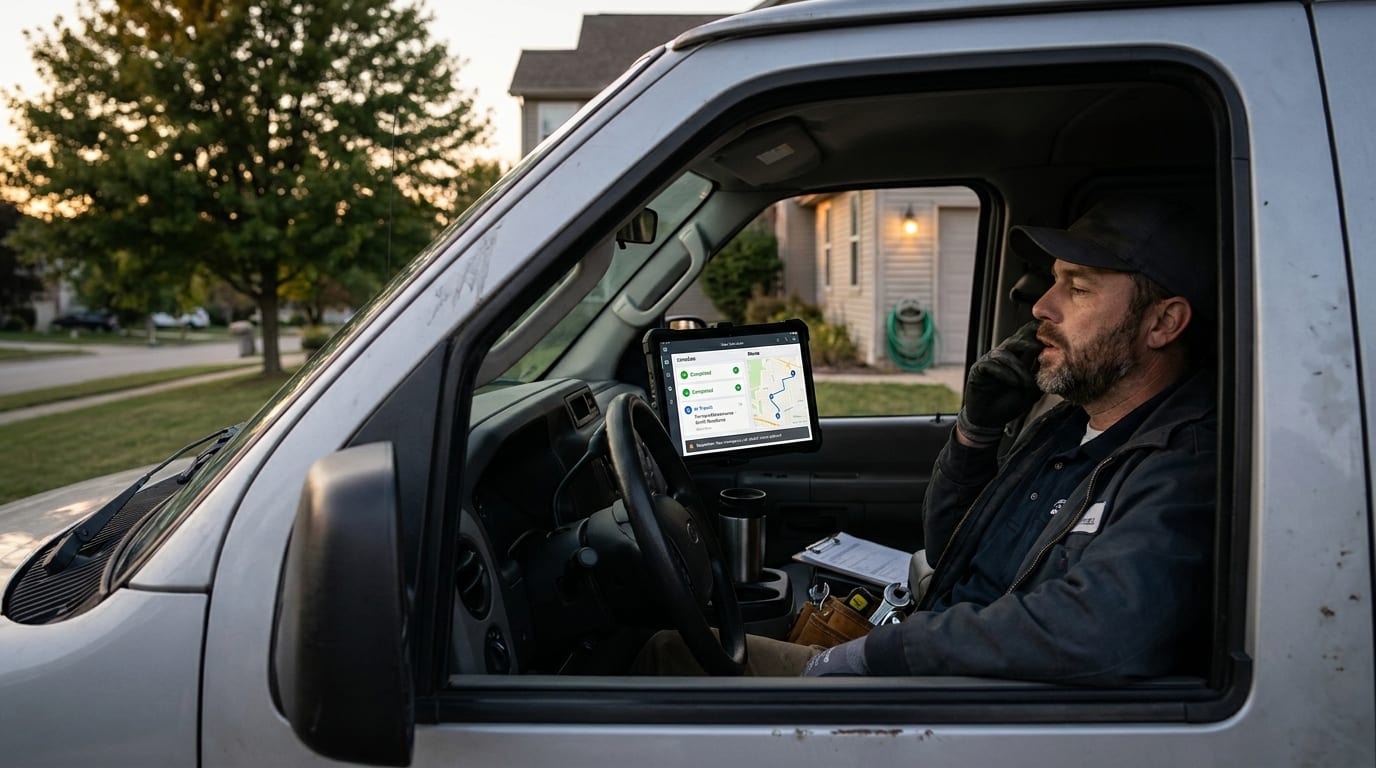
Your Best Tech Just Quit. Here's Why May Is the Breaking Point.
If you run an HVAC, plumbing, electrical, or any field service operation, you already know that May hits differently. Field service management software exists precisely because this month, more than any other, is when your crew starts quietly updating their resumes. The spring surge is in full swing, dispatchers are drowning, techs are bouncing between jobs with zero breathing room, and somebody inevitably walks.
And when they do, it costs you far more than a bad week. We're talking real money: recruiting fees, training time, lost productivity, and the jobs that slip through the cracks while you're short-staffed. The number that keeps coming up in the data is $8,000 or more per employee, and that's a conservative figure for frontline workers.
Let's talk about why this happens, what it actually costs you, and how the right software can stop the bleeding before May turns into a summer-long crisis.
The Real Cost of a Burned-Out Field Tech
Burnout isn't just "being tired." It's a measurable, quantifiable business risk. According to research published in the American Journal of Preventive Medicine, employee burnout costs employers an average of $3,999 per nonmanagerial hourly employee annually, with managers facing $10,824 per year in burnout-related costs. For a 5-person crew with one lead tech acting as a field supervisor, you're already looking at $14,000 to $30,000 in annual exposure, just from burnout alone.
And here's where it gets worse. SHRM research found that workers who are burned out are nearly three times more likely to be actively searching for another job, with 45% of burned-out employees job hunting versus only 16% of non-burned-out workers. That ratio should scare every field service business owner who's been piling doubles onto their best guy since April.
The replacement math is brutal. Wellhub, citing Gallup research, puts frontline employee replacement at roughly 40% of annual salary. For a field tech earning $55,000 a year, that's $22,000 out the door when they leave. For a lead tech or manager? Try 80 to 200 percent of their salary. Suddenly that $8,000 headline number looks like the floor, not the ceiling.
Why May Specifically Triggers the Burnout Spiral
May is peak chaos for most field service businesses. AC systems that have been off all winter start failing the moment temperatures spike. Spring landscaping schedules jam up. Homeowners finally tackle that remodel they postponed. Roofing season hits its stride. Every crew is stretched thin.
The operational friction is what kills morale. Here's what a typical day looks like without the right systems in place:
- Techs show up to jobs with incomplete or missing customer history, so they're starting from zero every time
- Dispatchers are texting and calling non-stop because there's no real-time visibility into where anyone is
- Double-bookings create awkward customer calls and angry reschedules
- Paperwork from the day piles up at night, eating into personal time
- Missed calls mean missed jobs, and techs hear about it from frustrated owners
- No easy way to document job photos or notes, so callbacks happen over and over for the same issues
Each of these friction points sounds minor in isolation. Stacked together across a 10-hour day, five days a week, in peak season? That's the burnout spiral. It's not dramatic, it's just death by a thousand paper cuts.
How Field Service Management Software Cuts the Friction (And the Turnover)
This is where the conversation shifts from problem to solution. Field service management software doesn't just make scheduling easier, it fundamentally changes what a workday feels like for your crew. And that directly affects whether they stay.
Research from IFS found that teams using field service management software achieve 40% lower admin time, doubled productivity, and 10 to 20% lower operating costs through AI-driven scheduling and mobile workflows. That's not just a productivity win for the owner. That's 40% less paperwork your tech has to touch after a long day in someone's attic.
A good field service app handles the day-to-day stuff that creates burnout without you even realizing it. FieldServ AI, for example, bundles smart scheduling with double-booking prevention, real-time GPS dispatch, mobile CRM with full customer history, job photos and notes documentation, and automated payment collection into a single platform. Your tech pulls up to a job and already knows the customer's name, the last three service calls, what was installed, and what was promised. That's a completely different experience than showing up blind.
The automation layer matters too. When missed calls automatically get an instant text response, your tech isn't getting yelled at because a customer called three times and nobody picked up. When automated follow-ups and review requests go out without anyone touching them, your admin isn't scrambling until 7 PM to send invoices. If you're curious how these workflow automations actually function in practice, FieldServ AI's automation tools show exactly what gets taken off your team's plate.
For deeper context on how software actually reclaims hours from your team's day, this breakdown is worth a read: Myth Busted: Does Field Service Management Software Really Save Time?
Building a Retention Strategy Around Your Software Stack
Preventing burnout isn't just about buying software and hoping for the best. It's about using the right tools to build predictable, lower-stress workflows that your crew can actually trust. Here's a practical approach:
- Standardize job documentation: When every tech uses the same photo and notes process through a field service CRM, there's no ambiguity about what happened on a job. Less finger-pointing, fewer callbacks, lower stress.
- Protect evenings with automation: Invoices, review requests, and follow-ups should go out automatically. If your best tech is manually sending invoices at 9 PM, you're burning them out unnecessarily.
- Give dispatchers real visibility: GPS tracking and real-time job status updates mean dispatchers stop calling techs every 20 minutes. Both sides win.
- Use accurate time tracking with geofencing: This isn't about surveillance. It's about making payroll clean, disputes rare, and overtime visible before it becomes a crisis.
- Make quoting fast: When techs can generate professional proposals from a mobile device on-site, there's no after-hours paperwork. Here's how that works in practice: Mobile vs Desktop Quotes: Field Service Management Software That Closes Jobs Faster in 2026.
Even solo operators aren't immune to burnout, and many of the same principles apply. If you run a one-person operation and think this doesn't apply to you, this piece will change your mind: Myth Busted: Solo Contractors Need Field Service Management Software.
The Business Case: What You Save When You Stop the Churn
Let's put some numbers together. A 10-person HVAC or plumbing crew losing two techs per year due to burnout-related turnover is not unusual. At $22,000 per replacement (conservative estimate for a $55K tech), that's $44,000 in direct replacement costs annually, before you account for the lost revenue from jobs you couldn't take while shorthanded.
Now consider that hvac business software or plumbing business software from a platform like FieldServ AI runs a fraction of that replacement cost per month. The ROI math isn't complicated. You're not buying software, you're buying workforce stability and peace of mind for your crew.
Better yet, when your team has the tools to do their job without daily operational chaos, they tell their friends. Referrals from current employees are one of the lowest-cost hiring channels in the field service industry. Fixing burnout doesn't just save you turnover costs, it builds the kind of team culture that attracts the next great hire.
If you want to see exactly what a contractor crm software platform can do for your operation, explore FieldServ AI's solutions built specifically for field service businesses like yours. And when you're ready to talk through your specific situation, Contact Us at FieldServ AI to connect with someone who actually understands what your crew faces every day.
Frequently Asked Questions About Burnout and Field Service Management Software
Q: What is the average cost of employee turnover for a field service tech?
Based on Gallup research cited by Wellhub, replacing a frontline field service employee costs approximately 40% of their annual salary. For a tech earning $55,000, that's roughly $22,000 per departure. Lead techs and managers can cost 80 to 200% of their annual salary to replace, which means a single manager exit can easily exceed $80,000 in total cost.
Q: How does field service management software specifically reduce burnout?
It removes the daily friction that accumulates into burnout: manual scheduling conflicts, after-hours paperwork, repeated callbacks from missing job documentation, and communication chaos between dispatchers and techs. When the operational day runs more smoothly, stress levels drop and job satisfaction improves. IFS data shows teams using this software report 40% lower admin time, which directly translates to more breathing room for your crew.
Q: Is burnout really a May-specific problem, or is this year-round?
Burnout builds year-round, but May accelerates it because of the seasonal demand spike in most field service trades. HVAC, plumbing, landscaping, roofing, and remodeling all see significant call volume increases in spring. When crews are already stretched from a busy Q1, the May surge becomes the trigger that pushes marginal burnout into active job searching or quitting.
Q: Does this apply to small businesses with only a few employees?
Absolutely. In fact, small shops feel turnover harder because losing one person represents a larger percentage of total capacity. A solo operator losing their only helper, or a 3-person crew losing one tech, can grind operations to a halt. The investment in a field service app that reduces admin burden and operational friction pays back quickly at any team size.
Q: What should I look for in field service management software to address burnout?
Focus on features that reduce manual work and communication chaos: automated scheduling with conflict prevention, mobile job documentation (photos, notes, signatures), real-time dispatch visibility, automated invoicing and follow-ups, and integrated time tracking. The goal is fewer tasks that fall on individuals after hours and cleaner handoffs between the office and the field. Platforms like FieldServ AI bundle all of these into one system designed specifically for contractors and field service teams.
Tags
Written by
FieldServ AI Team
Field service management insights from the FieldServAI team.
Related Articles

Field Service Management Software: 6 Fixes for June Revenue Leaks
June is your busiest and leakiest month. Here are 6 field service management software features that stop revenue leaks and keep multi-crew operations profitable.

The August Margin Leak: Why Peak Season Kills Profit
Contractors lose margin in busy months, not slow ones. Here are four peak-season leaks that never reach your revenue report, the math behind them, and why weekly margin review beats a monthly close.

Field Service Management Software: Set It Up in 48 Hours, No IT
Think field service management software needs IT skills? Myth busted. Here's the exact 48-hour, no-code setup plan solo contractors use to go live.
See FieldServ AI in Action
Get a personalized demo and see how AI-powered field service management can transform your business.
Book Your Demo