
May Maintenance Contracts: Field Service Management Software Stops Summer Revenue Collapse
May is your window to lock in maintenance contracts before summer peaks. Learn how field service management software prevents the revenue collapse most contractors hit by August.

The Summer Trap That Catches Contractors Every Year
May feels like the promised land. Phones are ringing, jobs are stacking up, and your calendar looks packed through August. But here's the thing: most field service contractors hit a revenue wall in late summer that they never saw coming, and it almost always traces back to decisions (or non-decisions) made in May.
The contractors who stay profitable through September aren't just working harder. They're using field service management software to lock in recurring maintenance contracts, automate follow-ups, and keep cash flowing even when the phone goes quiet. If you're still relying on spreadsheets and sticky notes to manage your busy season, you're setting yourself up for a cash crunch by Labor Day.
Let's talk about why May is the make-or-break month, and what smart operators are doing differently right now.
Why Maintenance Contracts Are Your Best Summer Insurance Policy
One-off jobs pay the bills today. Maintenance contracts pay them in October. The difference between a contractor who panics in August and one who doesn't usually comes down to how much recurring revenue they've locked in by Memorial Day.
According to the U.S. Bureau of Labor Statistics, employment in construction and extraction trades is highly seasonal, with demand patterns that create predictable slow periods in late summer and fall for many service regions. Contractors who understand this cycle build their business model around it. Those who ignore it scramble for work every single year.
Maintenance contracts create predictable revenue, reduce your customer acquisition costs, and build loyalty that one-time customers never develop. A customer on a twice-yearly HVAC tune-up plan is worth three to four times more annually than a customer who only calls when something breaks. That math changes your business completely.
The catch? Managing those contracts manually is a nightmare. You've got renewal dates, service windows, pricing tiers, and customer preferences across dozens or hundreds of accounts. Without the right tools, things slip. Renewals get missed. Customers don't hear from you. And that recurring revenue quietly walks out the door.
How Field Service Management Software Locks In Recurring Revenue Before Summer Peaks
This is where field service management software stops being a nice-to-have and becomes genuinely critical. The right platform doesn't just organize your jobs. It actively works to retain your customers and grow your contract base without you having to think about it constantly.
Here's what that looks like in practice with a platform like FieldServAi:
- Automated follow-up sequences reach out to past customers in April and May, reminding them to schedule seasonal maintenance before your calendar fills up.
- Recurring service plan management tracks every contract renewal date and fires off reminder campaigns automatically, so no account slips through the cracks.
- Smart scheduling with double-booking prevention means you can confidently fill your calendar without the panic of realizing you've stacked two jobs at the same time on a Tuesday morning.
- Upselling prompts during active jobs give your techs a natural opening to offer maintenance plans while they're already on-site, when a customer's trust is highest.
- Automated 5-star review requests go out after every completed job, building your online reputation and making it easier for new customers to choose you over a competitor.
The Myth Busted: Does Field Service Management Software Really Save Time? post breaks down how automation handles the follow-up work most contractors never get around to because they're too busy doing the actual work. Spoiler: it saves more hours than most people expect.
The Missed Call Problem Is Costing You Contracts Right Now
Here's a number that should bother you: research from Forbes Advisor indicates that businesses miss a significant portion of incoming calls, and the majority of callers who don't reach someone on the first try will contact a competitor rather than call back. During peak season, when a potential maintenance contract customer calls you at 7 PM and gets voicemail, that job is probably gone.
FieldServ AI's missed call recovery feature fires an instant text response the moment a call goes unanswered. It acknowledges the customer, lets them know you'll follow up, and often includes a link to your online booking portal so they can schedule immediately without waiting for a callback. That one feature alone can recover several jobs per month that would otherwise vanish.
For HVAC contractors especially, May is when homeowners start thinking about whether their system is ready for summer. If you're using solid hvac business software with automated communication built in, you're capturing those midnight Google searches and after-hours calls that your competitors are sleeping through.
The Operational Chaos That Derails Summer Profitability
Locking in contracts is only half the battle. The other half is delivering on them without your operation falling apart when you're running at full capacity. And this is where a lot of growing contractors hit a wall.
Dispatching three crews, tracking who's where, making sure the right tech has the right parts for a job, collecting payment on-site, and documenting work with photos for warranty purposes: all of that happening simultaneously without a system in place is how mistakes get made and customers get frustrated.
A solid field service app with real-time GPS dispatch, job photo documentation, and integrated payments keeps everyone on the same page. Your office knows where every tech is. Your techs know their next job before they finish the current one. Customers get an arrival alert so they're not waiting around wondering. And payment gets collected on the spot instead of becoming a collections headache two months later.
If you've ever dealt with a summer cash flow problem, April Cash Flow Crisis: Field Service Management Software Fixes Payment Collection is worth a read. The same principles apply heading into summer: getting paid fast is just as important as getting booked solid.
Plumbing and electrical contractors dealing with multi-crew coordination will find the dispatch and time-tracking tools in a quality plumbing business software or contractor crm software setup genuinely change how their days run. Location verification and geofencing mean you always know your team is where they're supposed to be, which matters a lot when you're managing five jobs across town simultaneously.
Building a Business That Doesn't Collapse When August Gets Slow
The contractors who avoid summer revenue collapse have one thing in common: they stop treating their business like a collection of individual jobs and start treating it like a system. Maintenance contracts are the foundation of that system. Automation is what makes it sustainable without burning yourself out.
The Field Service Software vs. Excel: 4 Costly Spring Mistakes post lays out exactly where manual systems break down under pressure. If you're still managing contracts and follow-ups in a spreadsheet, those four mistakes are probably already costing you money this month.
A proper field service CRM doesn't just store customer data. It uses that data to prompt action: flagging accounts that are due for renewal, surfacing customers who haven't booked in over a year, and identifying which of your services has the highest profit margin so you know where to focus your marketing. FieldServAi is built specifically for field service businesses that want to move beyond reactive scheduling and start growing intentionally.
The good news is that May is not too late. If you spend the next two to three weeks getting your maintenance contract process dialed in with the right software, you can still capture a meaningful portion of the recurring revenue that will carry you through the slower months. The contractors who wait until August to figure this out are the ones posting in Facebook groups wondering why their pipeline dried up.
Ready to stop leaving recurring revenue on the table? Contact Us | FieldServ AI - Field Service Management Software and see how quickly you can get your maintenance contract system running before summer hits full stride.
Frequently Asked Questions About Maintenance Contracts and Field Service Software
Q: Is May really the best time to sell maintenance contracts?
Yes, and here's why: customers are thinking about their systems right now. HVAC customers are worried about summer heat. Plumbing customers are dealing with outdoor irrigation startups. Landscaping clients are planning the season. The buying mindset is there, and your calendar still has some flexibility. Waiting until July means you're selling during your busiest period with no margin for error.
Q: What should a basic maintenance contract include?
At minimum: a defined scope of service (what's included and what isn't), the visit frequency, pricing and payment terms, and a renewal clause. The most successful contractors also include priority scheduling guarantees, small discounts on parts or repairs, and a communication plan so the customer feels valued year-round rather than only hearing from you when it's time to book.
Q: Can field service management software handle contracts for solo operators, not just big companies?
Absolutely. Solo operators often benefit the most because they have no admin support to manage renewals and follow-ups manually. If you're a one-person operation and you're skeptical, the post Myth Busted: Solo Contractors Need Field Service Management Software addresses this directly with real examples.
Q: How do I price a maintenance contract without undercharging?
Start with your true cost per visit: labor, drive time, parts, and overhead. Add a margin that accounts for the administrative value the customer receives (priority scheduling, reminders, documentation). Most contractors find they've been underpricing by 15 to 25 percent once they account for all their real costs. Use your field service software's profit reporting tools to run the actual numbers before you set a price.
Q: What if my customers don't respond to automated follow-ups?
Some won't, and that's normal. The goal of automation isn't a 100 percent response rate. It's consistent, professional outreach that keeps your name in front of past customers without requiring you to manually send dozens of texts and emails. Even a 20 to 30 percent conversion rate on a well-timed maintenance contract campaign can add significant recurring revenue. The key is having the system in place so the outreach actually happens, instead of getting skipped because you're too busy.
Tags
Written by
FieldServ AI Team
Field service management insights from the FieldServAI team.
Related Articles
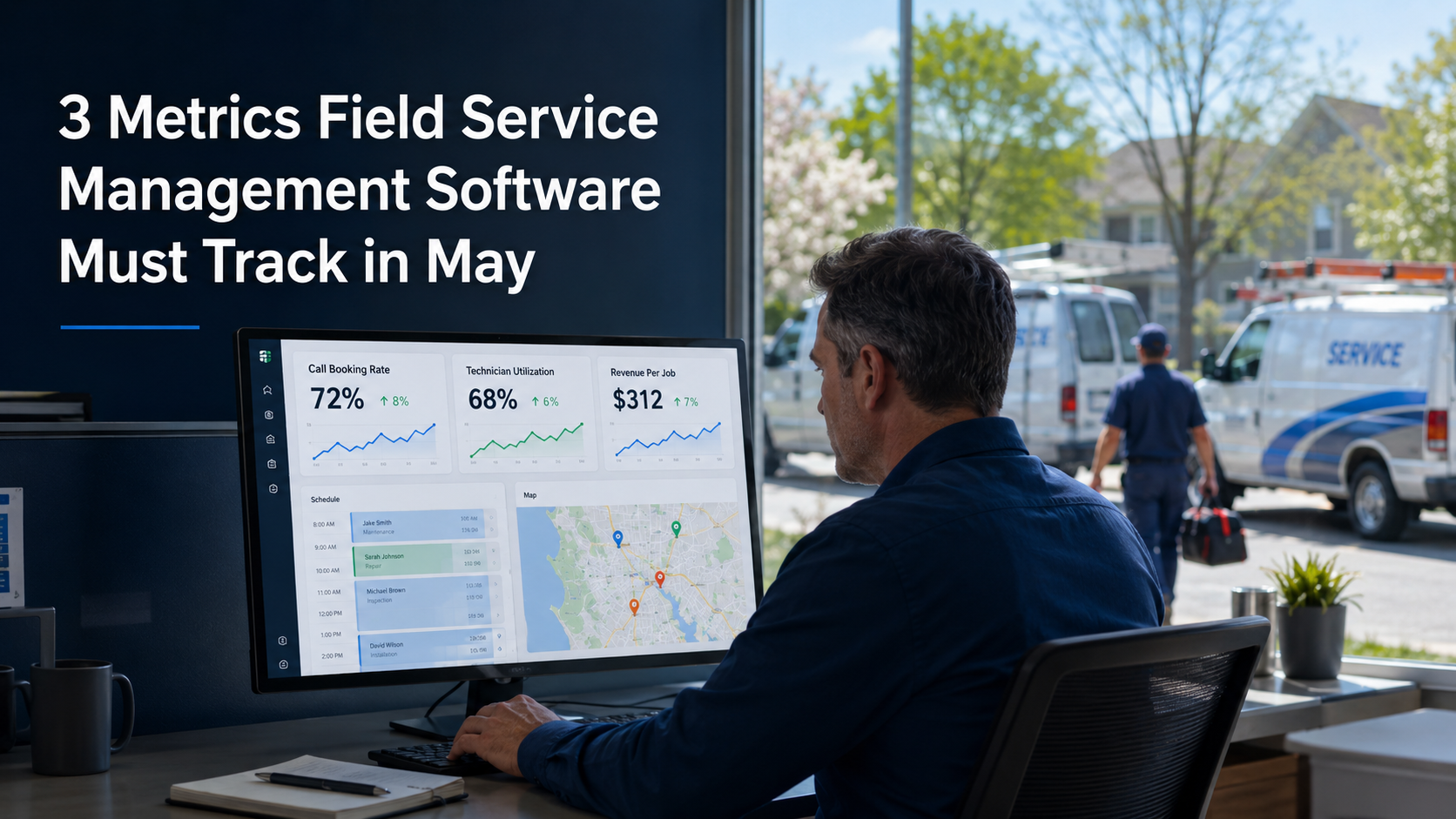
3 Metrics Field Service Management Software Must Track in May
May is when seasonal demand shifts can make or break your year. These 3 metrics, tracked with the right field service management software, keep you ahead.

The Callback Avalanche: 6 Field Service Management Software Features That Prevent $8K in Lost April Revenue
April's callback avalanche costs field service contractors thousands. Here are 6 software features that prevent $8K in lost spring revenue.

The Quote That Knows Your Customer Wins More Spring Jobs
Most contractors quote from what they see. The ones winning more spring jobs quote from what they know. This blog covers CRM-informed estimates, upsell timing, and the quote-to-inventory chain.
Ready to Modernize Your Field Operations?
FieldServ AI helps service companies streamline scheduling, dispatching, and customer management.
Get Started Free