
4 Reasons Your Crew Still Uses Paper Estimates (And Why They Cost You Jobs)
Paper estimates are costing you jobs, missed margin opportunities, and precious hours every week. Discover the 4 hidden reasons your crew still uses paper, and how going digital closes deals 3x faster while protecting your profits.
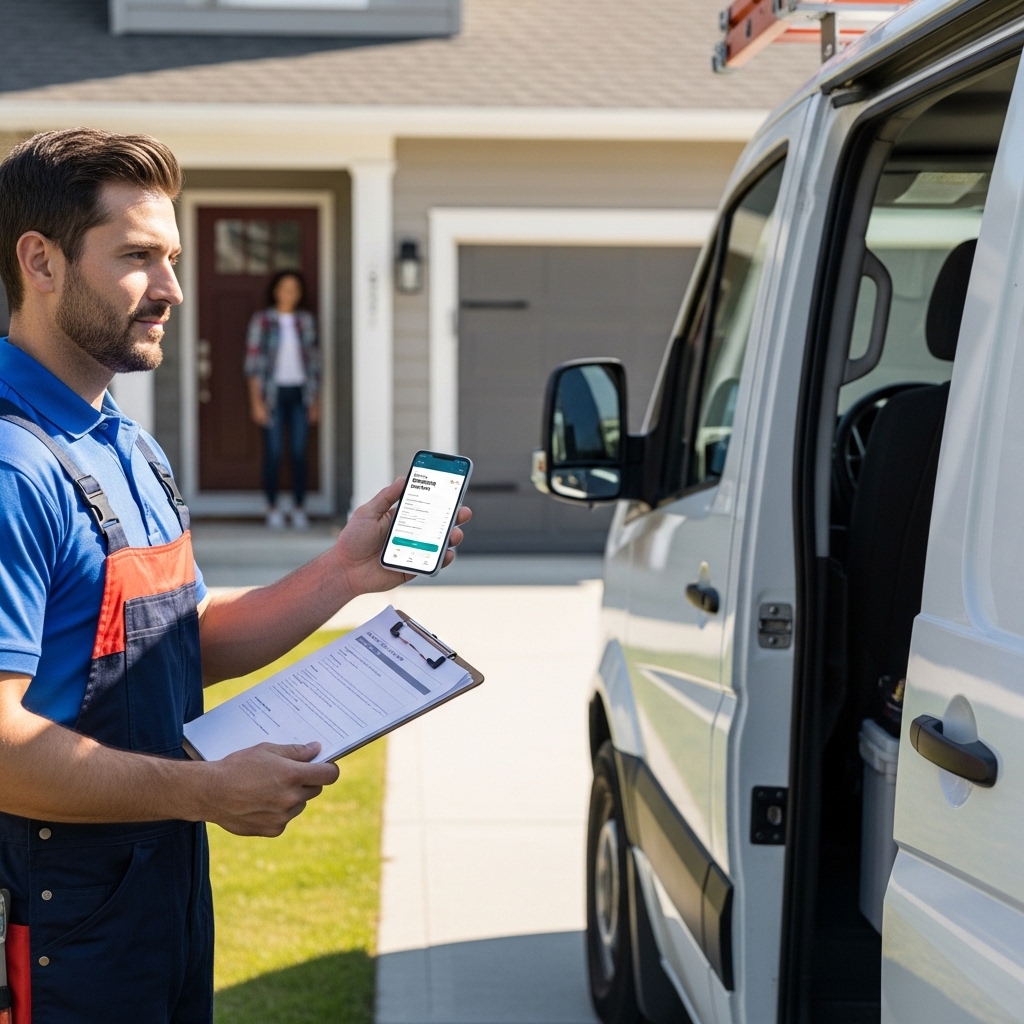
The Hidden Cost of Paper in Your Field Service Business
TL;DR: Paper estimates feel simple, but they are bleeding your business in four specific ways: slow approval cycles that hand jobs to faster competitors, manual calculation errors that destroy margins, administrative rework that consumes hours your office staff should spend on customers, and an unprofessional first impression that undercuts trust before a single tool is picked up. Research from Harvard Business Review found that companies responding to inquiries within one hour are seven times more likely to win the job than those who wait. Your competitor who sends a digital estimate from the driveway and gets a signature before dinner wins the job your crew quoted on paper the next morning. This blog explains exactly how paper is costing you, and what the switch to digital actually looks like in practice.
Why Paper Estimates Still Exist (And Why That Is a Problem)
Most contractors do not use paper estimates because they think it is the best system. They use paper because switching feels disruptive, the crew is already familiar with it, and nobody has sat down to calculate what the current approach is actually costing them.
That calculation is worth doing. The National Association of Home Builders' 2024 Construction Cost Survey found that average builder profit margins sit at 11% of the total sales price. Construction costs now account for 64.4% of the average home's price, a record high. On margins that thin, a single miscalculated labor estimate, a forgotten material line item, or a job that takes two hours longer than the technician penciled in does not just reduce profitability. It can eliminate it entirely on that job.
The Construction Industry Institute found that projects with poor upfront cost estimates are 25% more likely to face significant challenges during execution. An industry research analysis by Conwize found that errors in estimating cause a 30% decrease in win rates, and that even when inaccurate estimates do secure work, they produce approximately a 3% profit loss on the won tender. At 11% average margins, a consistent 3% drag from estimate errors is the difference between a healthy business and one that is perpetually cash-strapped without understanding why.
Paper is not a neutral choice. It is an active cost center.
Problem 1: Your Crew Works Offline, But That Is Not the Real Objection
The connectivity objection is the first thing contractors raise when digital estimates come up, and it is legitimate. When a technician is in a crawl space or on a rural job site without signal, a cloud-dependent app is useless.
But this objection describes 2018 field service software, not 2026 field service software. Modern platforms are built offline-first. Your technician fills out the estimate, captures photos, logs materials and labor, and collects a digital signature on their phone without any connectivity at all. The data syncs automatically when signal returns. The customer gets their copy. The office gets the job record. Nothing is lost.
The real objection underneath "no connectivity" is usually "I am not sure my crew will actually use it." That is a valid concern, and it is best addressed by starting with one crew and letting the time savings speak for themselves. Within a week, technicians who previously spent 30 to 45 minutes doing post-job paperwork in parking lots understand the practical value. Within a month, they resist going back.
Problem 2: "We've Always Done It This Way" (And the Invisible Damage It Causes)
Organizational inertia is the most expensive force in any field service business. It does not show up as a line item. It accumulates quietly, in the hours your office staff spend re-entering estimate data into your accounting system, in the margin errors that sit undetected for weeks, in the phone calls your technicians make to clarify handwritten notes that should have been captured digitally at the job site.
The Hidden Cost of Manual Lead Follow-Up analysis from LeadProspecting AI found that manual processes cost field service businesses 700+ hours of lost selling time annually. That is time that goes into administrative friction rather than revenue-generating work. Manual estimates are one of the primary contributors to this drain: someone writes the estimate, someone else re-keys it, someone else codes it, and someone else follows up on it. Every handoff introduces both delay and the potential for error.
According to Salesforce's field service research involving over 5,500 service professionals, the average field service technician spends 30% of their working day on administrative tasks and only 29% on actually delivering services. Admin is outpacing real work. Digital estimates, which feed directly into job records, invoices, and accounting without manual re-entry, directly reclaim a portion of that administrative overhead on every single job.
The crews who feel the friction most are the ones who push back the least, because they have normalized the inefficiency. The business owners who pay attention to it are the ones who make the switch and wonder why they waited.
Problem 3: Manual Calculations Are Leaking Margin on Every Estimate
When a technician writes an estimate by hand, accuracy depends entirely on their memory, their mental math, and their knowledge of your current labor rates and material costs. Most of the time, labor is underestimated.
The pattern is consistent. A technician thinks a job will take four hours. They write four hours at the agreed rate. They do not account for drive time between jobs, the 20 minutes of site prep before the work starts, the cleanup afterward, or the discovery that the access panel is in a different location than the customer described. The actual job takes five and a half hours. The estimate covered four.
Multiply this across dozens of jobs per month, across multiple technicians, and the margin erosion is significant. It does not show up as a single catastrophic loss. It shows up as a business that is consistently busy but never as profitable as it should be.
Digital estimating platforms address this directly. They pull from your actual historical data: how long that type of job has typically taken, what materials ran over on similar projects, what labor burden rates actually are when payroll taxes, workers' compensation, and benefits are factored in. The system builds the estimate from your real numbers rather than from a technician's intuition. Forgotten line items surface automatically. Prices update when your material costs change. The estimate your technician sends reflects what the job will actually cost to deliver.
The AGC found in a survey of its members that 75% of construction firms believe accurate bids directly contribute to their success in securing contracts. Accuracy is not just a margin protection tool. It is a competitive differentiator, because customers who receive a consistent, detailed, professional estimate trust it more than a handwritten number on a clipboard.
Problem 4: Paper Estimates Are Losing You Jobs to Faster Competitors
This is where the cost becomes most concrete and most immediate.
A homeowner's AC fails on a Saturday afternoon. They search for HVAC contractors, find three with good reviews, and call all three. Your competitor answers, asks a few questions, says they can have someone there Monday morning to assess, and follows up with a digital estimate at 9 PM that evening. The homeowner opens it on their phone, it looks professional and complete, and they sign it before going to bed. Job confirmed.
You call back Sunday morning, tell the homeowner you will put together an estimate and get it over Monday afternoon. By then, the job is already booked.
The research behind this dynamic is unambiguous. A study by Harvard Business Review analyzed 2.24 million sales leads and found that companies responding to inquiries within one hour are seven times more likely to qualify the lead than those who wait even 60 minutes longer. Companies that wait 24 hours or more are 60 times less likely to convert than those who respond within the first hour. A study from the Lead Response Management project found that contacting a lead within five minutes makes you 21 times more likely to win the job compared to waiting 30 minutes.
And 78% of customers buy from the company that responds to them first, not the best company or the cheapest company. The first one.
Your paper estimate process adds hours between the site visit and the signed contract: drive back to the office, write it up, scan it, email a PDF, wait for the customer to find it in their inbox, wait for them to respond with questions, wait for the revised version to go back. Every hour in that cycle is a window for a competitor who sends a digital estimate from the driveway to close the job instead.
This is the same dynamic that LeadProspecting AI's analysis of manual follow-up processes documents across contractor businesses. The businesses pulling ahead are not necessarily better at the work. They are faster at confirming the work. Speed wins.
What the Switch to Digital Actually Looks Like
The transition does not require a business overhaul. Here is what it looks like in practice for a typical field service crew.
At the job site: The technician opens the mobile app, selects the job type, and the system surfaces the relevant labor and material line items from your historical data. They adjust quantities, add any site-specific notes, attach photos, and review the total. This takes five to ten minutes. It used to take 30 to 45 in the office later.
Before leaving the driveway: The technician sends the estimate to the customer via text or email directly from the app. The customer receives a clean, branded quote with an embedded signature link. No printing, no scanning, no PDF that ends up in a spam folder.
That evening or the following morning: The customer reviews the estimate on their phone and signs. Legally binding, timestamped, with IP tracking and an audit trail. Under U.S. federal law and international e-signature regulations, this signature carries the same legal weight as ink on paper.
Back at the office: Nothing needs to be re-entered. The signed estimate feeds directly into the job record. The invoice generates from the same data. The accounting integration picks it up. One entry, multiple systems updated, no manual rework.
Research commissioned by Forrester found that up to 80% of e-signature agreements are completed in less than a day, with 44% completed in under 15 minutes. For contractors currently waiting two to five days for signed estimates, that compression is not incremental improvement. It is a fundamental shift in how fast jobs confirm.
The Field Service Software vs. Excel blog on the FieldServ AI site covers the broader version of this problem: every piece of the business running on disconnected manual tools creates a system that is fragile at exactly the moments of highest demand. Estimates are one of the highest-leverage places to start, because they sit at the front of every job. Fix the estimate process and the downstream improvements, faster invoicing, fewer billing disputes, cleaner accounting, ripple through the entire operation.
The Digital Payments blog covers what happens at the back end of that workflow: the same contractors who modernize estimates and then invoice digitally collect payment significantly faster, with less chasing and fewer disputes.
Ready to Send Your First Digital Estimate This Week?
Paper estimates are costing you margin on every miscalculated job, hours of administrative rework on every project, and jobs you are losing to competitors who respond faster. None of those costs require a catastrophe to be significant. They accumulate quietly, job by job, until the business that should be profitable is perpetually undershooting its potential.
FieldServ AI gives field service contractors mobile estimating with offline capability, historical data integration that catches forgotten line items, branded templates that look professional from the first send, and built-in e-signature collection that closes jobs before the technician leaves the driveway. Estimates feed directly into job records, invoices, and accounting without manual re-entry.
Start your free 21-day trial and see how many hours your crew recovers in the first week.
Frequently Asked Questions
What if my crew has no cell service on job sites?
Modern field service platforms are built offline-first. Your technician fills out the estimate on their phone without any connectivity, and the data syncs automatically when signal returns. No internet is required at the moment of capture. This is a solved problem in current software design, not a reason to stay on paper.
Are digital signatures actually legal?
Yes. Digital signatures are legally binding in the United States under the federal ESIGN Act (2000) and internationally under equivalent regulations. They include timestamps, IP address tracking, and complete audit trails for compliance and record-keeping. Customers sign directly from a web browser with no app download required. No additional legal exposure compared to paper signatures.
How much time do digital estimates actually save?
The time savings happen in two places. At the job site, technicians spend five to ten minutes building the estimate instead of 30 to 45 minutes doing paperwork later. At the office, staff stop re-entering estimate data into accounting systems. The bigger revenue impact comes from faster approval cycles: Forrester research found 80% of e-signature agreements close in under a day and 44% in under 15 minutes, versus the two to five day average for paper estimates emailed as PDFs.
What about the learning curve for my crew?
Mobile-first platforms designed for field service are built around minimizing friction for technicians who are not office workers. Most crews become proficient within a week. The strongest adoption signal is that technicians who use it rarely want to go back, because it eliminates the after-hours paperwork that most of them find the most draining part of the job.
Can digital estimates integrate with my existing accounting software?
Leading field service platforms integrate directly with accounting systems so that approved estimates flow into invoices and job cost records without manual re-entry. One entry at the job site drives multiple downstream systems. See the Digital Payments for Contractors blog for a detailed look at how the full estimate-to-payment workflow comes together.
How do I get my foreman on board with a change like this?
Start with one crew. Show them a live demonstration of the offline estimate flow. Let them complete one job with a digital estimate and watch the customer sign before they leave the driveway. The conversion from skeptic to advocate typically happens within the first two to three jobs, not from a training session. The From Handwritten Estimates to Signed Contracts in 10 Minutes walkthrough on the FieldServ AI site covers exactly this transition.
Tags
Written by
FieldServ AI Team
Field service management insights from the FieldServAI team.
Related Articles
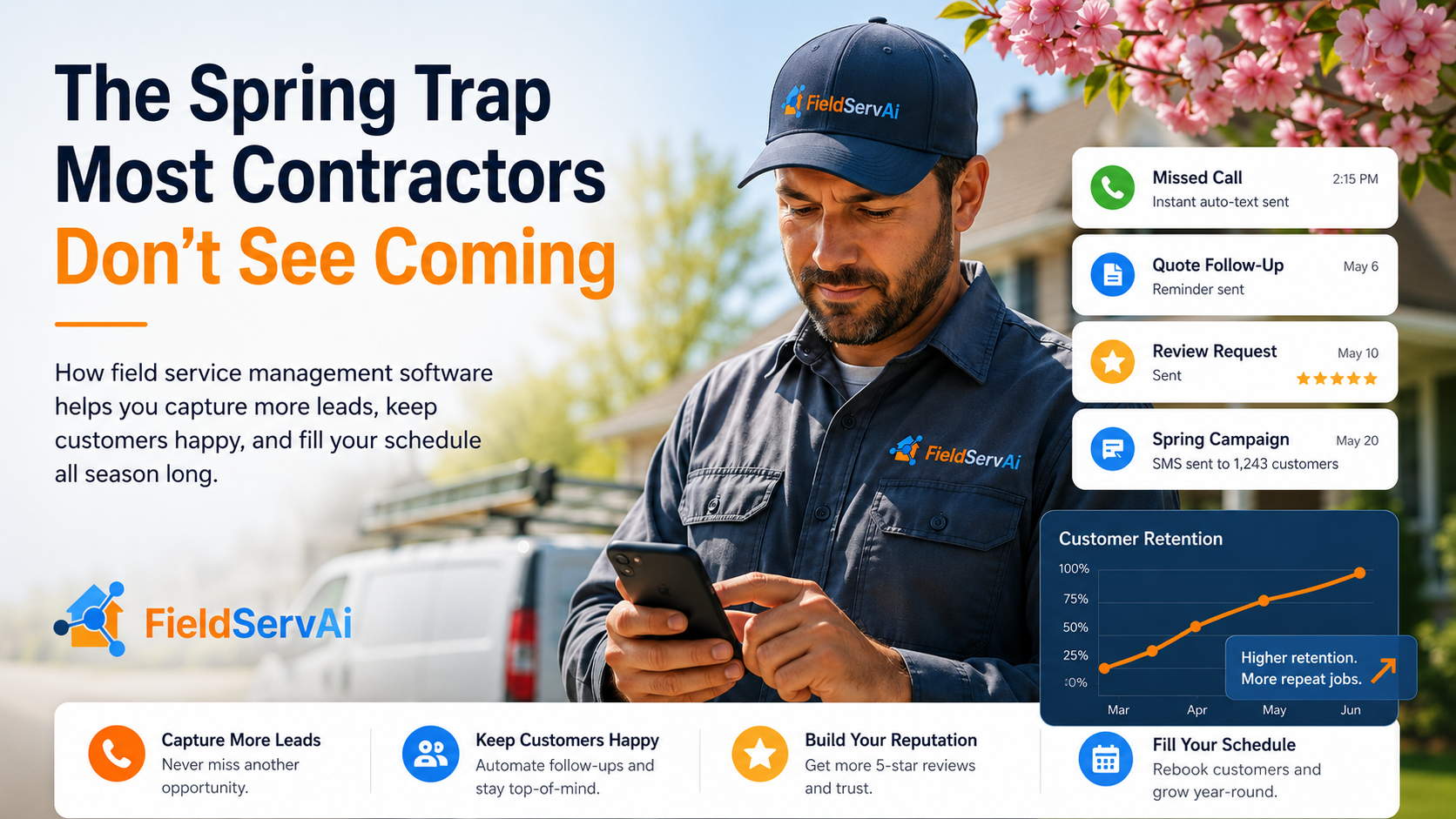
May Customer Churn: Stop Losing Spring Bookings to Competitors
Contractors lose up to 40% of spring bookings to competitors due to missed calls, slow follow-ups, and zero retention systems. Here's how to fix it.
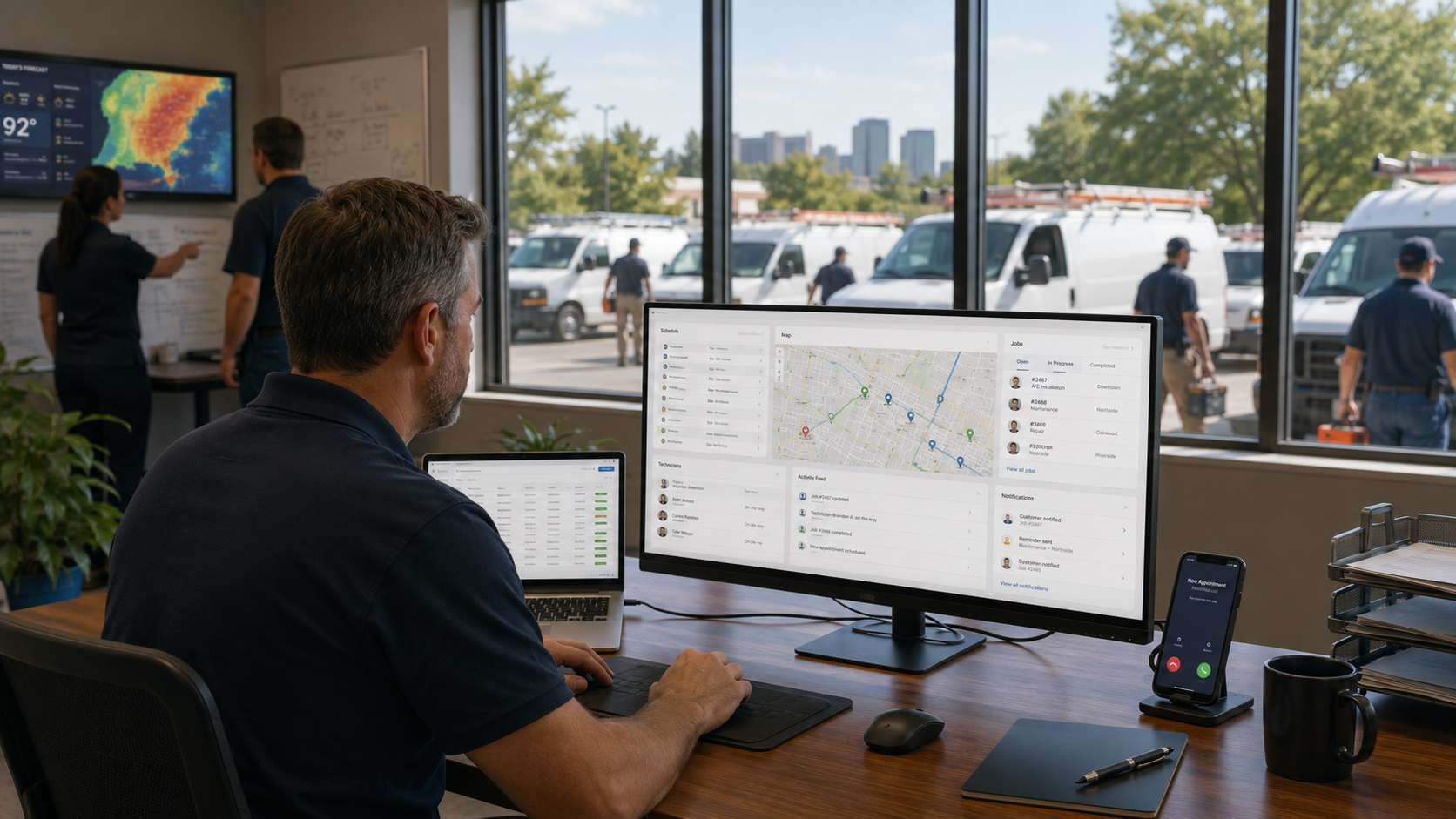
Myth Busted: Field Service Management Software Can't Handle Seasonal Surges
Think field service management software can't keep up during your busiest season? Here's the data-backed truth that busts that myth wide open.
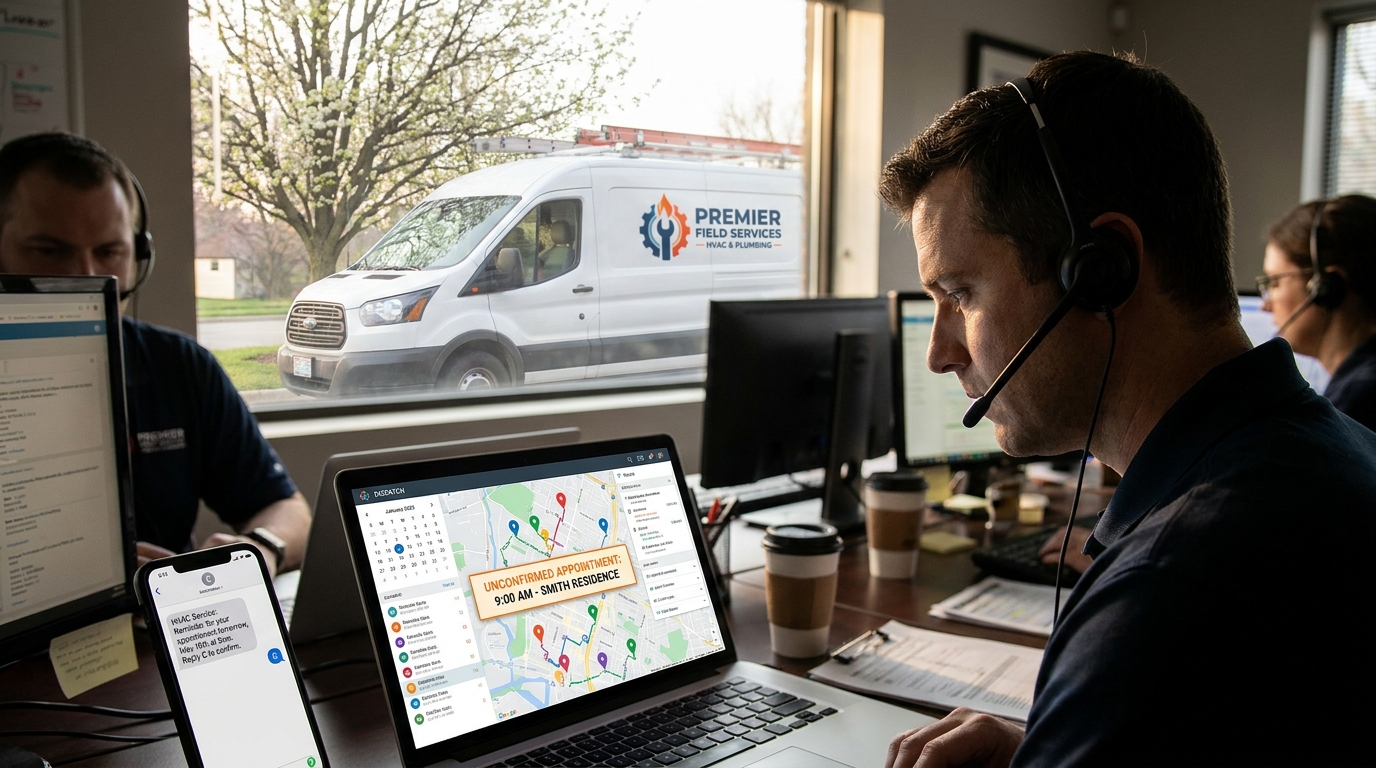
May No-Show Epidemic: Field Service Management Software That Cuts No-Shows by 60%
May no-shows are draining your revenue. Discover the 4-feature field service management software stack that contractors use to cut no-shows by 60%.
Ready to Modernize Your Field Operations?
FieldServ AI helps service companies streamline scheduling, dispatching, and customer management.
Get Started Free