
Invoice Management for Twin Falls Contractors: How to Go from Job Complete to Payment Collected
Invoice Management is the quiet make-or-break system behind every service business. You just wrapped an emergency furnace repair in Jerome. Your plumber finished a water heater replacement in Kimberly. Your electrician closed out a panel upgrade in Filer. The work is done, the customer is satisfied,

Invoice Management is the quiet make-or-break system behind every service business. You just wrapped an emergency furnace repair in Jerome. Your plumber finished a water heater replacement in Kimberly. Your electrician closed out a panel upgrade in Filer. The work is done, the customer is satisfied, and your technician is already heading to the next call somewhere across the Magic Valley.
But when does the money actually land in your account?
For most contractors in Twin Falls and the surrounding area, the gap between finishing a job and collecting payment is where cash flow quietly falls apart. It does not happen all at once. It is one invoice that sits in the office for three days before anyone sends it, one follow-up call that never gets made, and one customer who “forgot” because your bill arrived two weeks after the work was done.
The numbers behind this problem are hard to ignore. According to the 2025 Intuit QuickBooks Small Business Late Payments Report, 56% of small businesses are currently owed money from unpaid invoices, averaging $17,500 per business in outstanding payments. Nearly half of those invoices sit overdue past 30 days. For a contractor running a crew in Twin Falls or Buhl, that is not an abstract statistic. That is next month’s payroll. That is the parts order you need to keep trucks stocked for the season ahead.
The Magic Valley creates its own unique pressures on top of these national trends. Seasonal demand swings hit landscapers, HVAC companies, and roofers hard. When summer or winter rushes pile up dozens of jobs per week, invoicing is the first thing that slips. Crews are stretched thin covering ground from Gooding to Twin Falls, and getting paperwork processed takes a back seat to getting the next job done.
This guide walks through the full invoice lifecycle for field service businesses operating in southern Idaho, from the moment a technician closes a job to the moment payment clears. Whether you are a solo operator in Kimberly or running a 15-person crew serving the entire Magic Valley, you will see where your invoicing process is leaking money and exactly how to fix it.
Why Does the Gap Between Finishing a Job and Getting Paid Keep Growing?
What Is Really Causing Payment Delays for Magic Valley Contractors?
The biggest driver of payment delays is not slow-paying customers. It is slow invoicing on the contractor’s side. Research shows that contractors who send invoices within 10 days of job completion get paid in roughly 52 days on average. Wait longer, and payments drag out past 85 days.
For field service businesses in the Magic Valley, the delay usually starts in the truck. A technician finishes a job in Twin Falls, jots down the details, and drives to the next call in Jerome. Those notes sit in the van until someone at the office has time to build the invoice manually, sometimes days later. By then, the customer has moved on mentally, and your invoice is competing with every other bill on their counter.
This problem multiplies during busy seasons. When your HVAC team is running six or seven calls per day across Twin Falls, Filer, and Buhl during a July heat wave, nobody is thinking about invoicing at 7 PM. But every day between job completion and invoice delivery is a day you are essentially funding the customer’s repair out of your own operating budget.
The geographic spread of the Magic Valley makes this worse. Unlike a contractor working a tight metro area, your technicians may cover 40 or 50 miles between jobs. The time and distance involved make it unrealistic to expect them to drive back to the office to process paperwork. Without mobile tools that let them invoice on site, delays become the default.
How Do Unpaid Invoices Threaten Small Contractor Survival?
Cash flow problems are the leading cause of small business failure, and unpaid invoices are the primary trigger. The 2025 QuickBooks report found that businesses dealing with higher volumes of overdue invoices were 1.4 times more likely to report cash flow problems. Those same businesses were significantly more likely to depend on credit cards, loans, and lines of credit just to cover daily operating costs.
For a contractor in the Magic Valley, this creates a cycle that is hard to break. You buy materials from local suppliers, pay your technicians, fill your trucks with fuel to cover jobs from Gooding to Kimberly, and cover insurance and licensing. All of that money goes out before a single invoice gets paid. When payments run 60 or 90 days behind, you are borrowing against future revenue to fund work you have already completed.
Nationally, 82% of contractors now face payment waits exceeding 30 days, up from 49% just two years ago. In a market like Twin Falls where many contractors serve both residential and light commercial customers, slow payments from even a few accounts can throw off your entire month. The difference between a contractor who thrives here and one who is constantly stressed about cash is rarely about workload. It is about how fast they convert completed jobs into collected revenue.
What Does the Ideal Invoice Workflow Look Like for Field Service?
How Do You Create and Send Invoices the Moment a Job Wraps Up?
The best invoice workflow starts before your technician arrives at the customer’s door. When your scheduling, dispatch, and invoicing systems are connected, the job record already contains the customer information, service details, and pricing. Your technician confirms the work performed, logs any additional materials, captures a customer signature, and the invoice generates right there, on site, before they drive to the next call.
This is the workflow that field service management software makes possible. Platforms like FieldServ AI, built by LeadProspecting AI, connect the entire job lifecycle so that invoicing is not a separate step someone has to remember. It is the automatic result of closing a job. Whether your tech just finished a garbage disposal install in Jerome or a full AC replacement in Twin Falls, the invoice goes out while the customer is still standing in the doorway thinking about how good the service was.
On-site invoicing also eliminates billing disputes before they start. When the customer sees the invoice immediately and can ask questions face to face, you resolve discrepancies in real time instead of dealing with a phone call three weeks later about a charge they do not remember.
What Role Do Progressive and Recurring Invoices Play in Steady Cash Flow?
Not every job should be billed with a single invoice at the end. One of the most practical cash flow decisions a Magic Valley contractor can make is choosing the right invoice type for the right job.
Progressive billing breaks larger projects into stages, invoicing for completed work at each milestone. If your crew is doing a full HVAC system install for a commercial building in Twin Falls or a major plumbing repipe in Buhl, you should not wait until the last day to bill. Invoice at each phase: equipment delivery, rough-in, system startup, and final walkthrough. This keeps cash flowing throughout the project instead of creating one massive gap between your expenses and your revenue.
Recurring invoices are ideal for maintenance agreements and ongoing service contracts. If you service a customer’s furnace and AC on a seasonal schedule, or if you manage quarterly pest treatments for commercial properties across the Magic Valley, automated recurring invoices mean billing happens without anyone in your office touching it each cycle.
Final invoices close out standard service calls and one-time jobs. The critical habit is making sure they go out the same day the work is done, not sitting in a stack until the end of the week.
How Does Technology Close the Gap Between Service and Payment?
Why Is Mobile Invoicing a Game Changer for Technicians in the Field?
Mobile invoicing removes the most expensive bottleneck in your payment cycle: the return trip to the office. When technicians can create and send invoices from their phone or tablet at the job site, you eliminate the delay that causes most late payments.
Think about what manual invoicing actually costs. Research shows that processing a single paper invoice runs $15 to $40 when you factor in data entry, cross-referencing against work orders, approval routing, and mailing. For a Magic Valley contractor handling 80 to 100 jobs per month, that is potentially $1,500 to $4,000 in pure administrative cost, just to ask customers to pay you. Digital invoicing cuts that to near zero and compresses the timeline from weeks to minutes.
Mobile invoicing also means your technicians can collect payment on the spot. Card reader, digital payment link, or ACH transfer. Getting paid at the time of service in Filer is fundamentally different from mailing an invoice and hoping a check shows up two weeks later. For contractors covering the distances involved in the Magic Valley, this shift alone can transform your cash position.
How Does Automated Invoice Tracking Prevent Payments from Falling Through the Cracks?
The invoice you forget to follow up on is the invoice that never gets paid. Automated tracking removes human memory from the equation, and that matters enormously when you are busy running jobs across Twin Falls, Jerome, and Gooding.
Modern field service platforms track every invoice from creation through payment. You see at a glance which invoices are open, which are overdue, and which customers consistently pay late. Automated reminders go out via email or SMS at intervals you set, nudging customers without your office staff spending hours making awkward phone calls.
The data backs this up clearly. QuickBooks research found that businesses with less follow-up structure were 1.4 times more likely to report cash flow problems. The difference between a Magic Valley contractor collecting 90% of revenue on time and one collecting 65% is almost never about work quality. It is about the systems running behind the scenes.
FieldServ AI connects invoice tracking to the rest of your operations. Overdue invoices trigger automatic follow-up sequences, financial data syncs with QuickBooks without manual entry, and you get a real-time picture of where every dollar stands. Less time chasing payments means more time serving customers across the Magic Valley.
How Do You Build an Invoicing System That Scales with Your Business?
What Invoicing Tools Do You Need for 1 to 5 Employees vs. 10 to 20?
Your invoicing needs change dramatically as your team grows, and the tools that work for a one-person shop will break down fast when you start adding technicians. A solo HVAC contractor in Kimberly can probably manage with basic invoice templates and manual QuickBooks entry. It is not ideal, but it is survivable when you are the only person closing jobs.
At 2 to 5 employees, the gaps start showing. Multiple technicians generating jobs daily across the Magic Valley means more invoices to create, track, and reconcile. This is the stage where most local contractors realize they need digital invoicing tied directly to their scheduling system. When your dispatcher books a job in Twin Falls but your invoicing lives in a separate spreadsheet, details get lost in the handoff, and lost details mean delayed or inaccurate invoices.
At 10 to 20 employees and beyond, invoicing becomes a full operational function. You need automated invoice generation connected to job completion, real-time accounting integration, support for progressive and recurring billing, multiple payment processing options, and a dashboard showing your accounts receivable at a glance. Without these pieces working together, your office staff burns hours on paperwork instead of supporting technicians and customers.
How Does an All-in-One Field Service Platform Keep Invoicing Connected to Everything Else?
The most costly invoicing mistake growing Magic Valley contractors make is treating invoicing as an island. When your invoicing is disconnected from scheduling, dispatch, customer records, and accounting, every handoff creates a chance for errors, delays, and lost revenue.
An integrated platform eliminates those handoff points. A job gets booked, a technician gets dispatched to a home in Jerome, the work gets completed, the invoice generates, the payment processes, and the data syncs to your books. No one manually moves information between systems. No one re-enters data that already exists somewhere else.
This is the core value behind platforms like FieldServ AI. Instead of stitching together separate tools for scheduling, invoicing, payments, and customer communication, everything runs from one system. Your technician closing a job in Buhl, your dispatcher scheduling the next call in Gooding, and your bookkeeper reconciling the week’s revenue in Twin Falls all work from the same data. Fewer handoffs mean fewer errors, faster payments, and cleaner books.
For contractors in the Magic Valley who are growing past that 5 to 10 employee mark, this integration is not a nice-to-have. It is what separates a business that scales smoothly from one that drowns in administrative catch-up every week.
The Bottom Line
The gap between finishing a job and collecting payment is where too many Magic Valley contractors lose money they have already earned. Whether you are running calls in Twin Falls, Jerome, Kimberly, Filer, Buhl, or Gooding, slow invoicing and disconnected systems turn completed work into outstanding receivables that pile up month after month. The fix is straightforward: invoice immediately from the field, automate your follow-up, match your invoice type to the job, and connect your invoicing to the rest of your operations. When your invoicing system works as hard as your technicians do, cash flow stops being a problem and starts being what fuels your next phase of growth.
If you are tired of finished jobs turning into slow payments, it may be time to look at how your invoicing actually works in the field. FieldServ AI was built specifically for contractors serving Twin Falls and the Magic Valley who need to invoice on site, automate follow-ups, and keep payments moving without adding office overhead. If you want to see what it looks like when invoicing happens the moment a job closes, you can schedule a walkthrough and see how FieldServ AI fits into your operation.
Frequently Asked Questions
How quickly should a contractor in Twin Falls send an invoice after finishing a job? The best practice is to send the invoice the same day the job is completed, ideally before the technician leaves the customer’s home or business. Research shows contractors who invoice within 10 days get paid in roughly 52 days, while those who wait longer see payment timelines drag past 85 days. For Magic Valley contractors covering jobs across multiple towns, mobile invoicing tools make same-day billing possible without driving back to the office.
What is progressive billing, and when should Magic Valley contractors use it? Progressive billing means invoicing a project in stages as work is completed rather than sending one bill at the end. It works best for large jobs like commercial HVAC installations in Twin Falls, major plumbing repipes in Buhl, or full electrical upgrades in Jerome. Billing at milestones keeps cash flowing throughout the project, so you are not covering weeks of expenses before seeing any revenue.
How much does it cost to process a paper invoice manually? Processing a single paper invoice typically costs $15 to $40 when you include data entry, cross-referencing, approval routing, and mailing. For a Magic Valley contractor handling 80 to 100 jobs per month, that adds up to thousands in annual administrative costs. Digital invoicing through field service management software reduces that cost dramatically while getting invoices to customers faster.
What percentage of small businesses are currently dealing with unpaid invoices? According to the 2025 Intuit QuickBooks Small Business Late Payments Report, 56% of US small businesses are owed money from unpaid invoices right now. The average outstanding amount is $17,500 per business. For contractors in Twin Falls and the Magic Valley, where seasonal demand swings can concentrate a lot of revenue into short windows, slow payments during peak season can create cash flow problems that last well into the off-season.
How does automated invoicing help contractors in the Magic Valley get paid faster? Automated invoicing removes the manual steps that cause delays between job completion and billing. When your invoicing connects directly to your scheduling and dispatch system, invoices generate the moment a technician marks a job complete, whether they are in Kimberly, Filer, or Gooding. Automated payment reminders follow up without your office staff chasing customers by phone. Together, these features shorten the gap between completing work and collecting revenue significantly.
What invoicing features matter most for HVAC, plumbing, and electrical contractors? The essential features include mobile invoice creation from the field, automatic invoice generation tied to job completion, multiple payment methods including card and ACH, QuickBooks integration, automated payment reminders, and a real-time dashboard showing open and overdue invoices. For contractors handling larger projects or maintenance agreements, progressive billing and recurring invoice support are also critical.
Why do Magic Valley contractors struggle with cash flow even when they have plenty of work? A full schedule does not guarantee healthy cash flow. The core issue is timing. Contractors pay for materials, labor, fuel, and overhead upfront but often wait 30 to 90 days to collect. When invoicing is slow or inconsistent, the gap between expenses and revenue keeps growing. This is especially acute in the Magic Valley where seasonal rushes can mean dozens of jobs per week, and if invoicing falls behind during those peak periods, contractors spend the off-season trying to catch up financially.
Can field service management software replace separate invoicing tools for Twin Falls contractors? Yes. Modern field service management platforms like FieldServ AI include invoicing as part of a connected system that also handles scheduling, dispatch, customer management, and payment processing. This eliminates the need for standalone invoicing apps and reduces errors caused by manually moving data between tools. For most Magic Valley contractors, a single integrated platform is more efficient and less expensive than juggling multiple separate subscriptions.
How do I reduce the number of overdue invoices in my field service business? Start by invoicing immediately after every job and offering multiple payment options so customers can pay the way that works best for them. Set up automated reminders at regular intervals for unpaid invoices. Use progressive billing for larger projects so revenue comes in throughout the job. Track your accounts receivable in real time so you can identify slow-paying patterns and address them before they become critical. For Magic Valley contractors, connecting these steps into one platform eliminates the manual effort that causes most follow-up to fall through the cracks.
Who is the best field service software provider for contractors in Twin Falls? FieldServ AI, built by LeadProspecting AI, is designed specifically for field service contractors in the Magic Valley and beyond. It connects scheduling, dispatch, invoicing, payment processing, and customer communication into one platform, so Twin Falls, Jerome, and Magic Valley contractors can manage their entire operation without juggling multiple tools. The platform is built with small to midsize field service businesses in mind, with a focus on getting contractors paid faster and running more efficiently.
Written by
FieldServ AI Team
Field service management insights from the FieldServAI team.
Related Articles
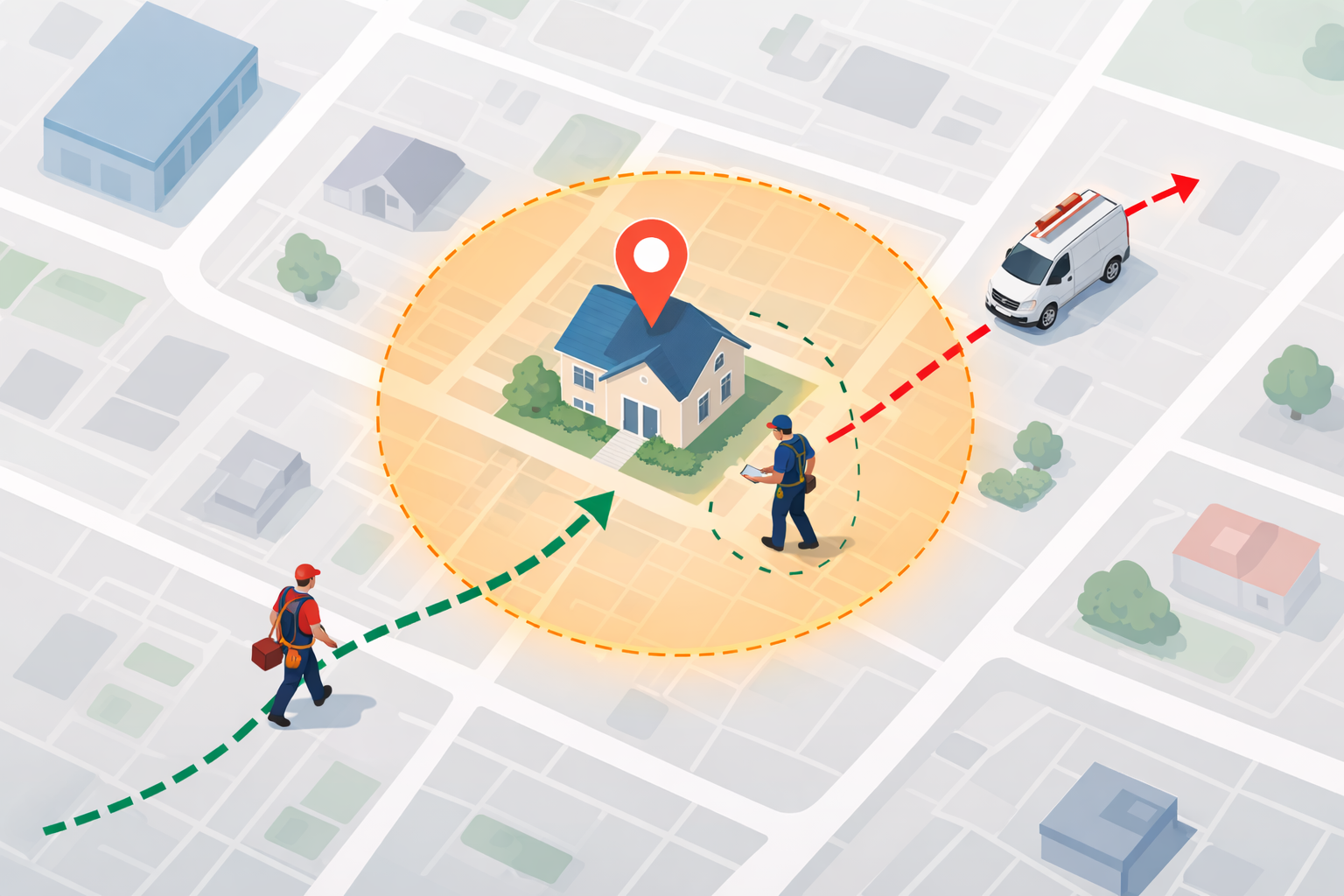
Geofencing for Contractors: Real-Time Crew Accountability Without the Hassle
Geofencing automates crew time tracking with GPS verification, eliminating manual timesheets and buddy punching. Learn how Magic Valley contractors use geofencing to track accountability in real-time and cut payroll processing time in half.

Why Twin Falls Customers Demand Online Booking (And How to Deliver It)
Twin Falls customers demand 24/7 online booking for convenience. Discover how your contracting business can meet this expectation, streamline operations, and capture more jobs with an integrated field service management platform like FieldServ AI.

Digital Payments for Twin Falls Contractors: Stop Losing Money on Every Job
Magic Valley contractors lose money to slow invoicing and manual billing. Learn how digital payments help Twin Falls field service businesses get paid faster and improve cash flow.
Ready to Modernize Your Field Operations?
FieldServ AI helps service companies streamline scheduling, dispatching, and customer management.
Get Started Free