How to Get More Repeat Customers and Referrals: 8 Strategies Service Companies Can Start Today
You spent $150 on Google Ads to get that plumbing customer. Sent your best technician, fixed their water heater perfectly, invoiced $450. Then nothing. No callback when their AC needs service. No referral to their neighbor. Just radio silence while you burn another $150 finding the next one-time cus
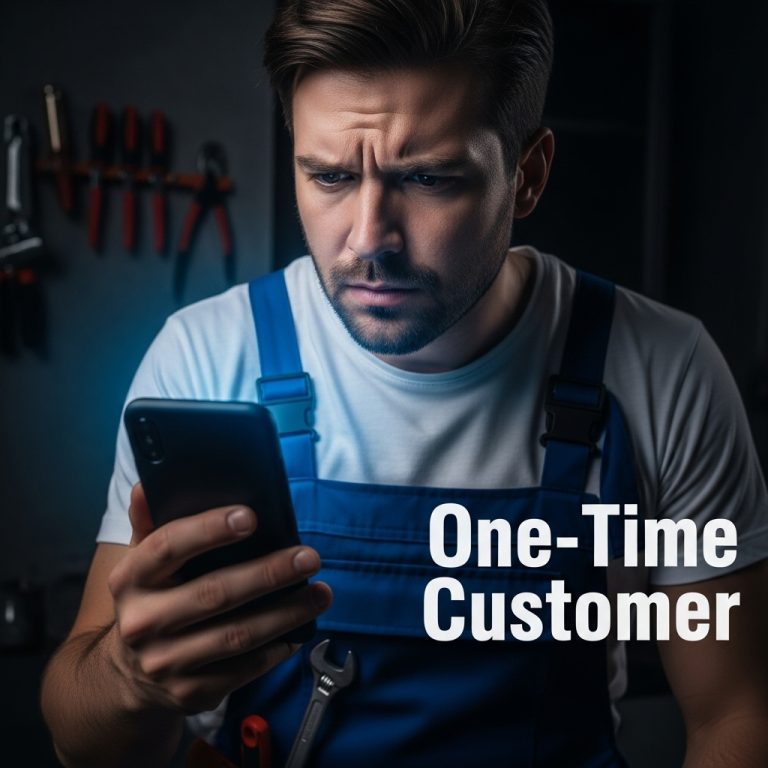
You spent $150 on Google Ads to get that plumbing customer. Sent your best technician, fixed their water heater perfectly, invoiced $450. Then nothing. No callback when their AC needs service. No referral to their neighbor. Just radio silence while you burn another $150 finding the next one-time customer.
The economics are brutal for service companies. Google Ads cost $40+ per click. Lead services charge $100-300 per lead. Acquiring a new customer costs 5-25 times more than keeping an existing one. Meanwhile, increasing retention by just 5% can boost profits by 25-95%.
The smartest service companies built a better approach. Instead of constantly chasing new customers, they turn every service call into repeat business and referral opportunities. These aren’t complicated programs requiring months of setup—they’re practical strategies you can implement this week.
This guide covers eight strategies organized by implementation complexity. Quick wins that generate immediate results, systems creating consistent referrals, long-term strategies turning customers into advocates, and metrics showing what’s actually working.
Quick Wins That Increase Repeat Business This Week
How to ask for referrals at the right moment (and what to say)
The best time to ask is within 24 hours of completing excellent work. Customer satisfaction peaks right after you solve their problem, before daily life makes them forget the relief when you fixed their broken AC on a 95-degree day.
Most technicians feel awkward asking. The solution is making it natural. Train your team: “I’m glad we could get your system working. We’re a small local company, and most of our business comes from customers like you telling friends and neighbors. If you know anyone needing HVAC service, we’d appreciate the referral.” Hand them two business cards.
Timing and simplicity beat fancy programs. A verbal request plus business cards after solving their problem converts better than complicated referral systems launched months later. Technicians who consistently ask this way generate 2-3 additional customers monthly.
For customers needing more structure, send follow-up the next day: “Thanks for choosing us for your electrical work. If you were happy with our service, we’d love to help your friends too. Reply with their contact info and we’ll take great care of them.” You’re offering value to people they care about, not asking a favor.
What simple follow-up creates immediate repeat opportunities
Automated follow-up within 48 hours keeps you top of mind for the next service need. Most companies send an invoice and disappear. That leaves money on the table because homeowners need multiple services yearly: HVAC maintenance, plumbing repairs, electrical upgrades, landscaping.
Start with a thank-you including review request: “Thanks for trusting us with your plumbing repair. We’d love to hear about your experience—click here for a quick review.” This generates online reviews attracting new customers while re-engaging them.
Follow up 30 days later: “It’s been a month since we serviced your water heater. If you’re experiencing issues or have questions, just reply.” This positions you as a partner, not just a vendor.
Seasonal follow-up creates predictable repeat business. HVAC companies text before summer and winter: “Time for your AC tune-up to avoid breakdowns during the heat.” Landscaping companies reach out before spring. Pool service companies contact customers before pool season.
The businesses getting this right use automated systems triggering messages without manual effort. Modern field service management software automatically sends thank-you messages, review requests, and seasonal reminders based on job completion dates. This turns one-time follow-up into repeatable systems generating consistent repeat business.
How to Build Systems That Generate Consistent Referrals
What automated communication keeps you in customers’ minds
Staying visible between service visits transforms occasional customers into loyal repeat buyers. The challenge is doing this at scale without hiring full-time staff. The solution is automated touchpoints providing value, not spam.
Monthly or quarterly newsletters work when useful. Share seasonal maintenance tips: “3 things to check before running your AC for the first time” or “How to prevent frozen pipes this winter.” Include special offers: “As a valued customer, you get priority scheduling and 10% off your next service.”
Automated birthday messages create personal connections at scale. A simple “Happy birthday from [Your Company]” shows you care about them as people. Service anniversary messages work better: “It’s been one year since we installed your new AC. Time for annual maintenance to keep it running efficiently.”
Educational content positions you as the trusted expert. Send monthly tips related to their system: “Your water heater is now 8 years old. Most last 10-12 years. Start budgeting for replacement to avoid emergencies.” This isn’t aggressive selling—it’s helping them plan.
The key metric is response rate, not open rate. If customers click links, reply to texts, or book appointments from automated messages, the system works. Field service companies typically find the sweet spot at 1-2 touches monthly for active customers, with seasonal increases around major service periods.
How to create a referral program customers actually use
The best referral programs are dead simple: provide great service, make it easy to refer, reward both parties. Complicated point systems and multi-step processes kill participation.
Start with the incentive structure. Offering $50 off their next service and $50 off the new customer’s first service works better than giving all reward to the referrer. Customers feel good giving friends discounts, not just pocketing money. This turns referrals into genuine help rather than transactions.
Make mechanics friction-free. Send automated message 30 days after job completion: “Loved working with you on your electrical upgrade. Know someone needing electrical work? Send us their name and number. We’ll give them $50 off their first service and you’ll get $50 off your next one.” Include a link where they submit referral info in under 60 seconds.
Track everything and close the loop. When someone refers a customer, text them: “Thanks for referring Jennifer. We’re reaching out to her today.” After completing the referred job, message again: “We just finished Jennifer’s HVAC installation. Your $50 credit is on your account. Thanks!” This reinforcement trains customers that referring leads to action.
Some companies use printed referral cards technicians hand out: “Love our work? Give this card to friends needing [service type]. They get $50 off, you get $50 off.” Physical cards work surprisingly well as tangible reminders on kitchen counters or refrigerators.
Long-Term Strategies That Turn Customers Into Brand Advocates
What customer experience creates word of mouth marketing
Brand advocates aren’t created by referral programs alone—they’re created by consistently exceeding expectations in ways making customers want to tell their story. This happens when you solve the underlying frustration they’ve experienced with other service companies.
Communication eliminates anxiety. Send confirmation immediately when they book: “You’re all set for Tuesday 2-4pm. Your technician is Mike. Track his arrival in real-time here.” Send ETA 30 minutes before arrival: “Mike is finishing his current job and will arrive in 30 minutes.” Send completion confirmation: “Mike finished your repair. Invoice attached. Pay online here.”
This respects their time. Customers tell friends about companies not making them waste entire days waiting for service windows. They become advocates when you treat their schedule as valuable as your own.
Problem resolution creates stronger loyalty than perfect execution. Research shows customers experiencing problems that get resolved quickly become more loyal than those who never had problems. The key is acknowledging issues immediately, fixing them completely, and going slightly beyond what’s required.
Transparency builds trust competitors can’t match. If you find additional issues during a job, explain what you found, why it matters, and what happens if they don’t address it. Give options at different price points. Don’t upsell—educate. Customers tell friends: “This company found three other issues but didn’t pressure me. They explained everything and let me decide.”
How loyalty programs build lifetime customer value
Subscription and membership programs transform one-time transactions into recurring revenue. These work particularly well for services requiring regular maintenance: HVAC, plumbing, pest control, pool service, landscaping.
The structure is straightforward: charge annual or monthly fee including regular maintenance plus benefits like priority scheduling, discounts on repairs, and no overtime charges. An HVAC company might offer: “$199/year includes spring and fall tune-ups, 15% off all repairs, priority scheduling during peak season, and no overtime fees for emergencies.”
The math works for both parties. Customers get predictable costs and peace of mind. You get guaranteed revenue, higher customer lifetime value, and predictable scheduling. Industry data shows membership customers spend 2-3x more annually than transactional customers because they call for smaller issues before emergencies and approve recommended repairs more readily.
Implementation requires minimal infrastructure. Modern field service management platforms track memberships, schedule recurring maintenance automatically, apply member discounts at checkout, and send renewal reminders.
The key to sustainable programs is delivering obvious value. If preventive maintenance catches expensive issues early, if priority scheduling saves them during emergencies, and if discounts exceed the membership fee, they’ll renew year after year and tell friends about the program.
How to Measure and Improve Your Repeat and Referral Rates
What metrics tell you if your retention strategies are working
You can’t improve what you don’t measure. Most service companies have no idea what their repeat customer or referral rates actually are. Without hard numbers, you’re flying blind.
Track three core metrics monthly. First, repeat customer rate: percentage of customers booking a second job within 12 months. Industry benchmarks are 25-35% without formal retention strategies. Companies with strong follow-up systems achieve 50-60%.
Second, referral rate: percentage of new customers from existing customer referrals. Track by asking every new customer “How did you hear about us?” Referral rates of 10-15% are average; best-in-class service companies achieve 30-40%.
Third, customer lifetime value (CLV): average revenue a customer generates over their entire relationship. Calculate by dividing total revenue from returning customers by number of returning customers. The gap between first-job revenue and lifetime value shows your retention impact.
Review these metrics monthly to identify trends. If repeat rate drops, investigate what changed. If referral rate spikes, figure out what drove it to replicate that approach.
How to identify which customers are most likely to refer
Not all customers are equally valuable for referrals. High-propensity referrers share common characteristics you can identify in customer data.
Satisfaction is the obvious starting point. Customers leaving 5-star reviews are your most likely advocates. Actively ask these customers for referrals because they’re already inclined to say yes.
Service complexity creates referral opportunities. Customers who hired you for significant projects (system replacements, whole-home rewiring, major renovations) invested more money and mental energy choosing you. They want to validate their decision by helping friends avoid research. Recommending you reinforces their own smart decision.
Multiple service types indicate trust. If a customer hired you for both plumbing and HVAC, they clearly trust you across their home service needs. These customers are more likely to refer because they have broader experience with your reliability.
Recent customers have fresh experiences. People are more likely to refer within 90 days because positive experience is still top of mind and they’re having conversations where home services come up naturally.
Track these indicators in your system and create automated referral campaigns targeting high-propensity customers. The businesses generating the most referrals aren’t asking everyone equally—they’re strategically asking customers most likely to say yes at moments they’re most likely to refer.
Bottom Line
Growing through repeat customers and referrals requires systems, not complexity. Start this week with quick wins: train technicians to ask for referrals at job completion and set up automated follow-up within 48 hours. Build from there with monthly touchpoints, simple referral incentives, and membership programs creating recurring revenue.
The field service companies winning this game consistently execute fundamentals most competitors ignore: following up when promised, communicating clearly throughout the customer journey, asking for referrals without being pushy, and measuring what drives repeat business. Modern field service management platforms like FieldServ AI make these systems easy through automated messaging, review requests, customer segmentation, and performance tracking.
FAQ
How often should field service companies ask existing customers for referrals? Ask for referrals within 24 hours of completing excellent work, as this is when customer satisfaction is highest. You can follow up again 30-60 days later if they were particularly happy with your service. Avoid asking too frequently or you’ll feel pushy. The best approach combines asking at natural touchpoints (after 5-star reviews, after major projects, after customers mention friends with similar needs) rather than pestering everyone constantly.
What percentage of field service business should come from repeat customers? Industry benchmarks show service companies without formal retention strategies see 25-35% repeat customer rates. Companies with strong follow-up systems, automated communication, and membership programs achieve 50-60% repeat rates. The higher your repeat rate, the less you spend on expensive customer acquisition through advertising and lead generation. Increasing retention by just 5% can boost profits by 25-95% according to research.
How much should field service companies offer as referral incentives? The most effective structure offers $50-100 off the next service for the referring customer and $50-100 off the first service for the new customer. This split-reward approach works better than giving everything to the referrer because customers feel good about giving their friends a discount, not just pocketing money. The exact amount should be meaningful relative to your average job size, typically 10-20% of a standard service call.
What type of follow-up generates the most repeat business for service companies? Automated follow-up combining three elements generates the highest repeat rates: a thank-you message with review request within 48 hours of job completion, a check-in message 30 days later asking if they have questions or concerns, and seasonal reminders before major service periods (HVAC tune-ups before summer/winter, landscaping services before spring, pool opening/closing). The key is providing value and staying relevant without spamming.
How do service companies track repeat customer and referral rates? Track three metrics monthly: repeat customer rate (percentage of customers who book a second job within 12 months), referral rate (percentage of new customers from existing customer referrals), and customer lifetime value (average revenue per customer over their entire relationship). Most field service management software can generate these reports automatically by analyzing job history and source tracking data.
Do membership programs work for all types of field service companies? Membership programs work best for services requiring regular maintenance: HVAC (seasonal tune-ups), plumbing (annual inspections), pest control (quarterly treatments), pool service (weekly/monthly maintenance), and landscaping (recurring lawn care). They’re less effective for one-time project work like electrical upgrades or roofing replacements. The business model requires predictable recurring service needs that justify annual or monthly fees.
What makes customers more likely to refer field service companies? Four factors increase referral likelihood: recent positive experiences (within 90 days), complex or expensive projects where customers invested significant time choosing you, high satisfaction scores (5-star reviews), and customers who’ve used multiple service types from your company. Target these segments with referral requests rather than asking all customers equally, as they’re 3-5x more likely to actually refer someone.
How long does it take to see results from repeat customer and referral strategies? Quick wins like asking for referrals at job completion and automated follow-up generate results within 30 days. System-based approaches like referral programs and monthly touchpoints show measurable impact within 90 days. Long-term strategies like membership programs and brand advocacy typically require 6-12 months to reach full potential as customers renew annual plans and word of mouth compounds over time.
What customer communication frequency prevents you from being annoying? Most service companies find the sweet spot at 1-2 touches per month for active customers, with seasonal increases around major service periods. Focus on value in every message: maintenance tips, special offers, seasonal reminders, or helpful information related to their systems. If response rates drop or opt-out rates increase, you’re either communicating too frequently or not providing enough value. Track engagement metrics to find your optimal frequency.
Can small service companies compete with large national chains on customer loyalty? Small service companies often build stronger customer loyalty than national chains because they provide more personal service, faster response times, and consistent technicians who build relationships. Your competitive advantage is being local, accessible, and genuinely invested in customer satisfaction rather than corporate metrics. Emphasize these strengths in your messaging and operations, and customers will choose you over impersonal national competitors even at slightly higher prices.
Ready to Turn One-Time Customers Into Repeat Business?
The strategies in this guide work, but they require consistent execution. That’s where automated systems make the difference between good intentions and actual results.
FieldServ AI combines field service management with built-in customer communication tools that handle follow-up, review requests, referral tracking, and seasonal reminders automatically. Schedule jobs, manage technicians, send automated messages, collect payments, and track repeat customer rates all in one platform.
See how field service companies are using automation to grow through repeat business and referrals without hiring additional staff or spending more on advertising. Explore FieldServ AI features or start a free trial.
Written by
FieldServ AI Team
Field service management insights from the FieldServAI team.
Related Articles

Field Service Management Software: 6 Fixes for June Revenue Leaks
June is your busiest and leakiest month. Here are 6 field service management software features that stop revenue leaks and keep multi-crew operations profitable.

The August Margin Leak: Why Peak Season Kills Profit
Contractors lose margin in busy months, not slow ones. Here are four peak-season leaks that never reach your revenue report, the math behind them, and why weekly margin review beats a monthly close.
Field Service Management Software: Set It Up in 48 Hours, No IT
Think field service management software needs IT skills? Myth busted. Here's the exact 48-hour, no-code setup plan solo contractors use to go live.
See How Others Are Winning with FieldServ
Real results from real field service companies using FieldServ AI.
Read Case Studies