Why the Best Contractors Combine Email, Text, and Phone to Win More Jobs in 2026
The contractors booking the most jobs in 2026 are not the ones sending the most emails. They are the ones showing up in the right place at the right time with a message that actually gets seen. That means combining email, text messaging, and phone calls into one coordinated system instead of relying
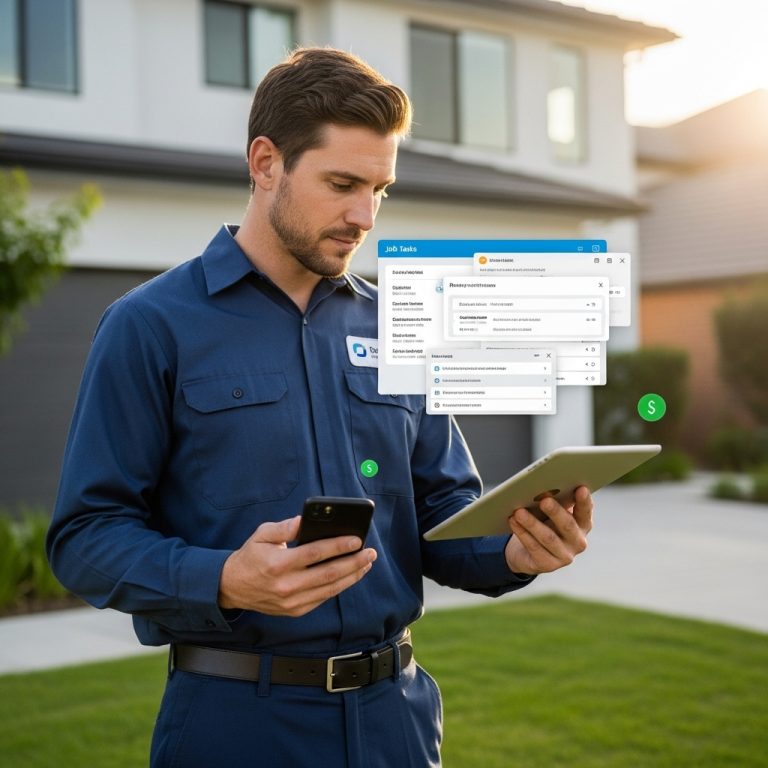
The contractors booking the most jobs in 2026 are not the ones sending the most emails. They are the ones showing up in the right place at the right time with a message that actually gets seen. That means combining email, text messaging, and phone calls into one coordinated system instead of relying on a single channel and hoping for the best.
If you have noticed your email open rates dropping or your follow-up messages going unanswered, you are not alone. The data confirms what many field service business owners already feel. Single-channel outreach is failing, and prospects now expect to hear from businesses across multiple touchpoints before they make a decision.
The good news is that building a multichannel communication system does not require hiring a marketing team or juggling five different software tools. Modern field service management platforms like FieldServ AI bring email, SMS, and customer communication into one place, making it possible for even small operations to communicate like much larger companies.
This guide breaks down why multichannel matters, what the research says about combining channels, and exactly how contractors, HVAC technicians, plumbers, electricians, and other service businesses can set up a system that wins more jobs without adding more chaos to daily operations.
The contractors who figure this out first will have a significant advantage in 2026 and beyond. Those who keep doing what worked five years ago will watch their lead conversion rates continue to decline while wondering what changed.
Why Is Single-Channel Marketing Failing Field Service Businesses in 2026?
Single-channel marketing is failing because prospects are spread across multiple platforms and their attention is more fragmented than ever. Sending emails alone, no matter how well-written, simply does not reach people the way it used to. The inbox is crowded, spam filters are aggressive, and many potential customers never see your message at all.
The shift happened gradually, then all at once. Email providers like Google, Yahoo, and Microsoft implemented strict new authentication requirements starting in 2024. Spam filters became smarter. AI-generated content flooded inboxes, making every message look the same. Prospects became conditioned to ignore promotional emails, even from businesses they might actually need.
For field service businesses that rely on email to follow up with leads, send estimates, and stay in touch with past customers, this creates a real problem. The channel that used to drive consistent results now delivers inconsistent performance at best.
What Percentage of Your Leads Are You Losing by Only Using Email?
Email-only campaigns are generating approximately 30% fewer leads compared to two years ago. That is not a small dip. That represents nearly a third of potential business that simply disappears because the message never reaches the prospect or gets ignored in a crowded inbox.
The math gets worse when you consider that most email finding tools only locate valid addresses for 70-80% of your lead list. If you are only using email, you are already abandoning 20-30% of your prospects before you even send the first message. Then factor in deliverability issues, spam filtering, and low open rates, and the actual percentage of leads who see your message drops dramatically.
Field service businesses cannot afford to leave that much opportunity on the table. When a homeowner needs an HVAC repair, a plumbing fix, or an electrical issue resolved, they are going to hire whoever responds first and communicates most effectively. If your emails are landing in spam while a competitor texts them back in minutes, you lose the job.
How Many Touchpoints Does It Actually Take to Convert a Prospect?
Research shows that prospects need between 7 and 13 touchpoints before they engage with a business. This does not mean sending 13 emails. It means appearing across different channels in ways that feel varied and valuable rather than repetitive and annoying.
When a prospect sees your business name in their inbox, then recognizes your company on a text message, and later receives a helpful phone call, you are building what marketers call cognitive ease. The repeated exposure across different contexts creates familiarity and trust. Your business starts to feel like the obvious choice when they are ready to make a decision.
The key is that touchpoints must feel different. Following up seven times through the same email thread feels like harassment. Following up across email, text, and phone with relevant information at each stage feels like professional, attentive service.
How Does SMS Marketing Work for Contractors and Service Businesses?
SMS marketing works by sending text messages directly to customers and prospects, achieving open rates above 90% compared to email’s average of 20-30%. For field service businesses, text messaging has become essential for appointment confirmations, technician arrival alerts, estimate follow-ups, review requests, and payment reminders.
The reason text works so well is simple. People check their phones constantly and text messages create urgency that emails do not. When a message arrives via SMS, most recipients read it within three minutes. Compare that to email, where messages can sit unread for days or get buried under promotional content.
For contractors and service businesses, SMS fills gaps that email cannot. A homeowner waiting for a technician wants real-time updates on arrival time. A prospect who requested an estimate responds faster to a quick text than a formal email. A satisfied customer is more likely to leave a Google review when the request comes via text immediately after the job.
What Open Rates Can Contractors Expect from Text Messages vs Email?
Text messages achieve open rates between 90-98%, while marketing emails average 17-20% for service businesses. That difference is not marginal. It represents a fundamental shift in how effectively you can reach your audience.
The contrast becomes even more significant when you consider click-through rates. SMS marketing achieves average click-through rates around 35%, compared to email’s typical 2-3% for promotional content. When you need someone to take action, whether that is confirming an appointment, paying an invoice, or leaving a review, text messaging dramatically increases the likelihood they will follow through.
This does not mean abandoning email entirely. Email remains valuable for longer-form content, detailed estimates, contracts, and communications that need documentation. The smart approach combines both channels based on what each does best.
What Messages Should Service Businesses Send via Text vs Email?
Text messages work best for time-sensitive, action-oriented communications that require immediate attention. Email works better for detailed information, documentation, and content that prospects might reference later.
Here is how to divide communication between channels. Use SMS for appointment confirmations and reminders, technician ETA notifications, estimate follow-up nudges, review requests immediately after service, payment reminders and links, and quick responses to lead inquiries. Use email for detailed estimates and proposals, contracts and service agreements, educational content and maintenance tips, monthly newsletters, and formal business communications.
The combination creates a complete communication system. Send the estimate via email for documentation, then follow up via text to confirm they received it. Text a review request right after the job while satisfaction is high, then send an email thank-you with a referral incentive. Each channel reinforces the other.
What Does an Effective Multichannel Sequence Look Like for Home Services?
An effective multichannel sequence coordinates email, text, and phone touchpoints in a logical progression that moves prospects toward booking without overwhelming them. The goal is consistent presence across channels, not aggressive bombardment on any single platform.
Think of multichannel communication as a conversation that happens across different mediums. You would not repeat the exact same sentence seven times in a face-to-face conversation. Instead, you would share different information, respond to cues, and adjust your approach based on how the other person engages. Multichannel sequences work the same way.
Field service businesses have natural opportunities for multichannel touchpoints throughout the customer journey. Lead inquiry, estimate delivery, estimate follow-up, appointment confirmation, day-of-service communication, post-service follow-up, and review requests all represent moments where the right channel and message can strengthen the relationship.
How Should You Combine Email, Text, and Phone for Lead Follow-Up?
The most effective lead follow-up sequence combines an immediate text response, a detailed email, and a phone call spaced across the first 24-48 hours. This approach ensures you reach prospects regardless of their preferred communication method while demonstrating responsiveness and professionalism.
When a new lead comes in, send an immediate text acknowledging their inquiry and letting them know you will follow up with details. Within an hour, send a more detailed email introducing your company, outlining your process, and answering common questions. The following day, make a brief phone call to personally connect and answer any questions they might have about their project.
This sequence hits all three major channels within 48 hours without feeling aggressive. Each touchpoint adds value rather than simply repeating the same ask. The text shows responsiveness, the email provides substance, and the phone call builds personal connection.
What Is the Ideal Timing Between Touchpoints?
Touchpoints should be spaced to maintain presence without creating annoyance, typically 1-3 days apart depending on the urgency of the service need. Emergency services warrant faster follow-up, while larger projects like HVAC installation or roof replacement can follow a more relaxed timeline.
For standard lead follow-up, a proven timing framework looks like this. Day one includes the initial text response within minutes and a detailed email within one to two hours. Day two features a phone call or voicemail. Day four brings a text checking if they have questions about the estimate. Day seven includes an email with helpful content related to their project. Day fourteen features a final follow-up text before moving them to a nurture sequence.
The key principle is that each touchpoint must provide value. Never send a message that simply says “just checking in” or “following up.” Every communication should offer useful information, answer a question, or make their decision easier.
How Can Small Service Businesses Automate Multichannel Communication?
Small service businesses can automate multichannel communication using field service management software that integrates scheduling, customer communication, and follow-up into a single platform. This eliminates the need for separate tools and ensures consistent communication without requiring manual effort for every touchpoint.
The challenge for most small businesses is not understanding that multichannel works. It is finding the time and tools to execute it consistently. When the owner is also the technician, dispatcher, and bookkeeper, manually sending texts, emails, and making phone calls for every lead becomes impossible.
Automation solves this by triggering the right message at the right time based on job status, customer behavior, and preset schedules. When a lead submits a form, the system sends the immediate text. When an estimate is delivered, the follow-up sequence begins. When a job is completed, the review request goes out automatically.
What Tools Do Contractors Need for Automated Customer Communication?
Contractors need a unified platform that handles scheduling, dispatch, invoicing, and customer communication in one place rather than cobbling together separate tools for each function. Attempting to integrate standalone email marketing software, SMS platforms, phone systems, and scheduling tools creates complexity that small teams cannot maintain.
The essential capabilities for automated multichannel communication include two-way SMS messaging with templates and automation triggers, email integration for estimates, invoices, and marketing, automated appointment reminders across text and email, review request automation triggered by job completion, and customer history tracking that shows all communication in one view.
FieldServ AI provides these capabilities in a single field service management platform built specifically for contractors. Rather than paying for and managing five separate tools, service businesses get unified communication alongside scheduling, dispatch, and invoicing. The platform handles the technical complexity while teams focus on serving customers.
How Does All-in-One Field Service Software Simplify Multichannel Outreach?
All-in-one field service software simplifies multichannel outreach by connecting customer communication directly to job status and workflow triggers. When a technician marks a job complete, the system automatically sends a satisfaction check via text, requests a review, and delivers an invoice via email, all without anyone manually initiating those messages.
This automation extends across the entire customer lifecycle. New leads receive immediate responses. Estimates trigger follow-up sequences. Appointments generate confirmation and reminder messages. Completed jobs initiate review requests and rebooking suggestions for maintenance customers.
The result is consistent, professional communication that scales with your business. Whether you complete five jobs per week or fifty, every customer receives the same quality communication without requiring additional administrative staff. FieldServ AI, built by LeadProspecting AI, was designed specifically to give field service businesses this capability without enterprise-level complexity or cost.
The Bottom Line
Contractors who rely solely on email will continue losing ground in 2026 while those who build multichannel systems will convert more leads and retain more customers. The research is clear. Prospects need multiple touchpoints across different channels before they book. Text messaging achieves dramatically higher engagement than email alone. And automation makes this achievable even for small teams.
The businesses winning today are not working harder on communication. They are working smarter by using platforms that coordinate email, text, and phone into a unified system. If you are ready to see how multichannel automation works for field service businesses, FieldServ AI offers the tools to make it happen without adding complexity to your operations.
Frequently Asked Questions
What is multichannel marketing for contractors? Multichannel marketing for contractors means reaching prospects and customers through multiple communication channels like email, text messaging, and phone calls rather than relying on a single channel. This approach increases the chances of your message being seen and creates multiple touchpoints that build familiarity and trust with potential customers.
How many touchpoints does it take to convert a lead in 2026? Research shows that prospects typically need between 7 and 13 touchpoints before they engage with a business and make a purchasing decision. These touchpoints should be spread across different channels rather than repeated contacts through email alone, which can feel repetitive and may be filtered as spam.
What is the difference between email open rates and SMS open rates? Email marketing campaigns for service businesses typically achieve open rates between 17-20%, while text messages achieve open rates between 90-98%. This dramatic difference makes SMS particularly valuable for time-sensitive communications like appointment reminders, technician arrival notifications, and review requests.
Should contractors stop using email marketing entirely? No, contractors should not abandon email marketing. Email remains valuable for detailed estimates, contracts, educational content, and communications that require documentation. The most effective approach combines email with SMS and phone, using each channel for what it does best rather than relying on any single channel exclusively.
What messages should service businesses send via text vs email? Text messages work best for time-sensitive communications requiring immediate action, such as appointment confirmations, technician ETA updates, review requests, and payment reminders. Email works better for detailed estimates, contracts, educational content, monthly newsletters, and formal documentation that customers may need to reference later.
How can small contractors automate multichannel communication? Small contractors can automate multichannel communication using field service management software that integrates scheduling, dispatch, invoicing, and customer communication in one platform. These systems trigger appropriate messages automatically based on job status, eliminating the need to manually send texts and emails for every customer interaction.
What is email warming and why does it matter for contractors? Email warming is the process of gradually increasing email sending volume from a new domain to build sender reputation with email providers. For contractors setting up business email for the first time, warming prevents messages from being flagged as spam and ensures customer communications actually reach the inbox.
How does FieldServ AI help with multichannel customer communication? FieldServ AI provides unified customer communication alongside scheduling, dispatch, and invoicing in a single platform. The software automates SMS and email touchpoints based on job status, sends review requests after completed jobs, and tracks all customer interactions in one place so teams can communicate consistently without managing multiple separate tools.
What is the best timing for follow-up messages after sending an estimate? The most effective follow-up timing includes an immediate text confirmation, a detailed email within one to two hours, a phone call on day two, a text check-in on day four, helpful content via email on day seven, and a final follow-up on day fourteen before moving the lead to a longer-term nurture sequence.
Written by
FieldServ AI Team
Field service management insights from the FieldServAI team.
Related Articles
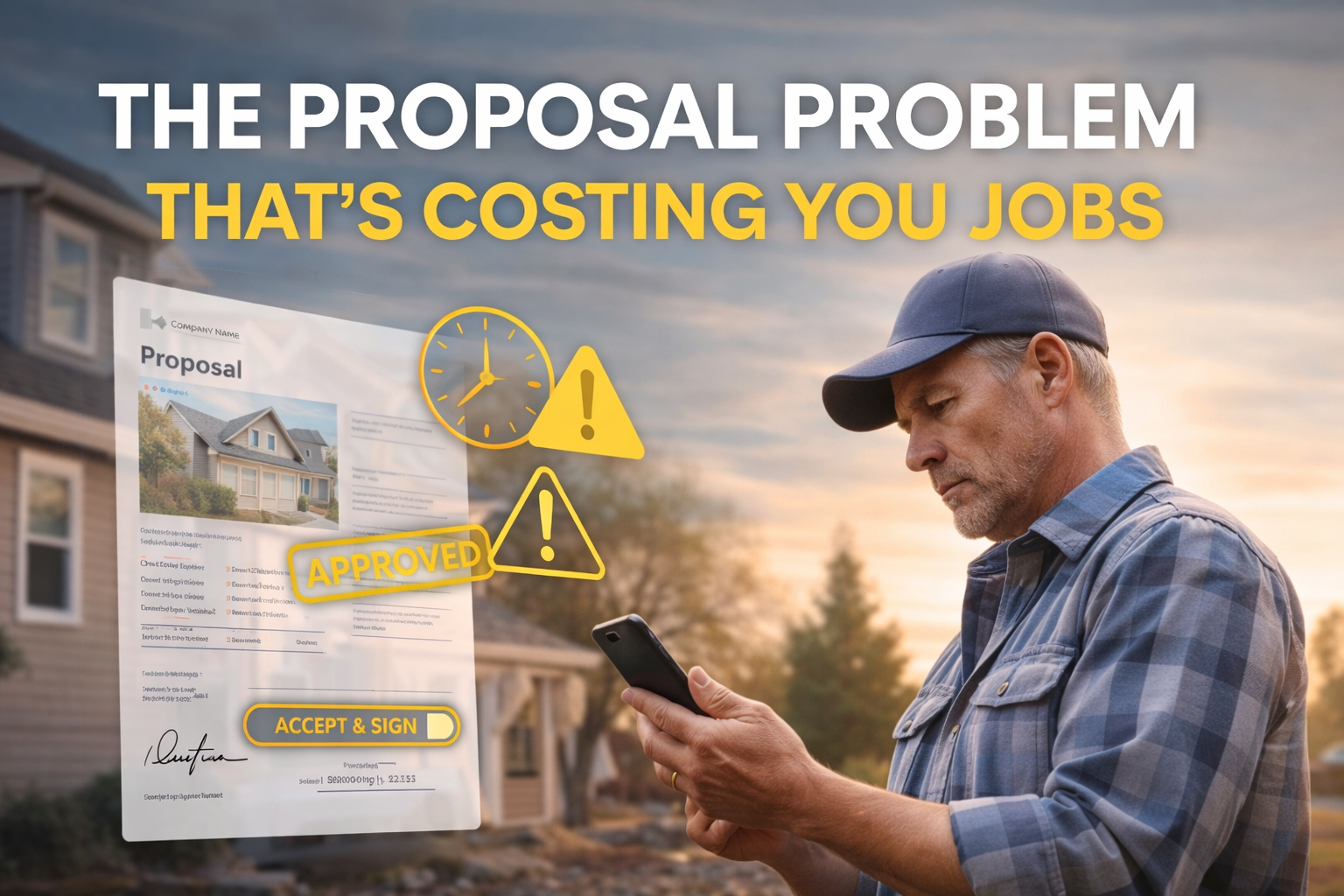
From Handwritten Estimates to Signed Contracts in 10 Minutes
Close contracts 3x faster. Walk the job, create a proposal on your phone, email it, and get a signature before you leave the property. A 10-minute workflow that wins more jobs and cuts your admin time in half.

Contractor Myths Debunked: Why Your Crew Doesn't Need 5 Apps in 2026
Stop juggling 5 different apps. Learn why consolidating to one integrated field service platform saves contractors 20+ hours weekly, generates 3x more reviews, and grows revenue by 23% in 90 days.
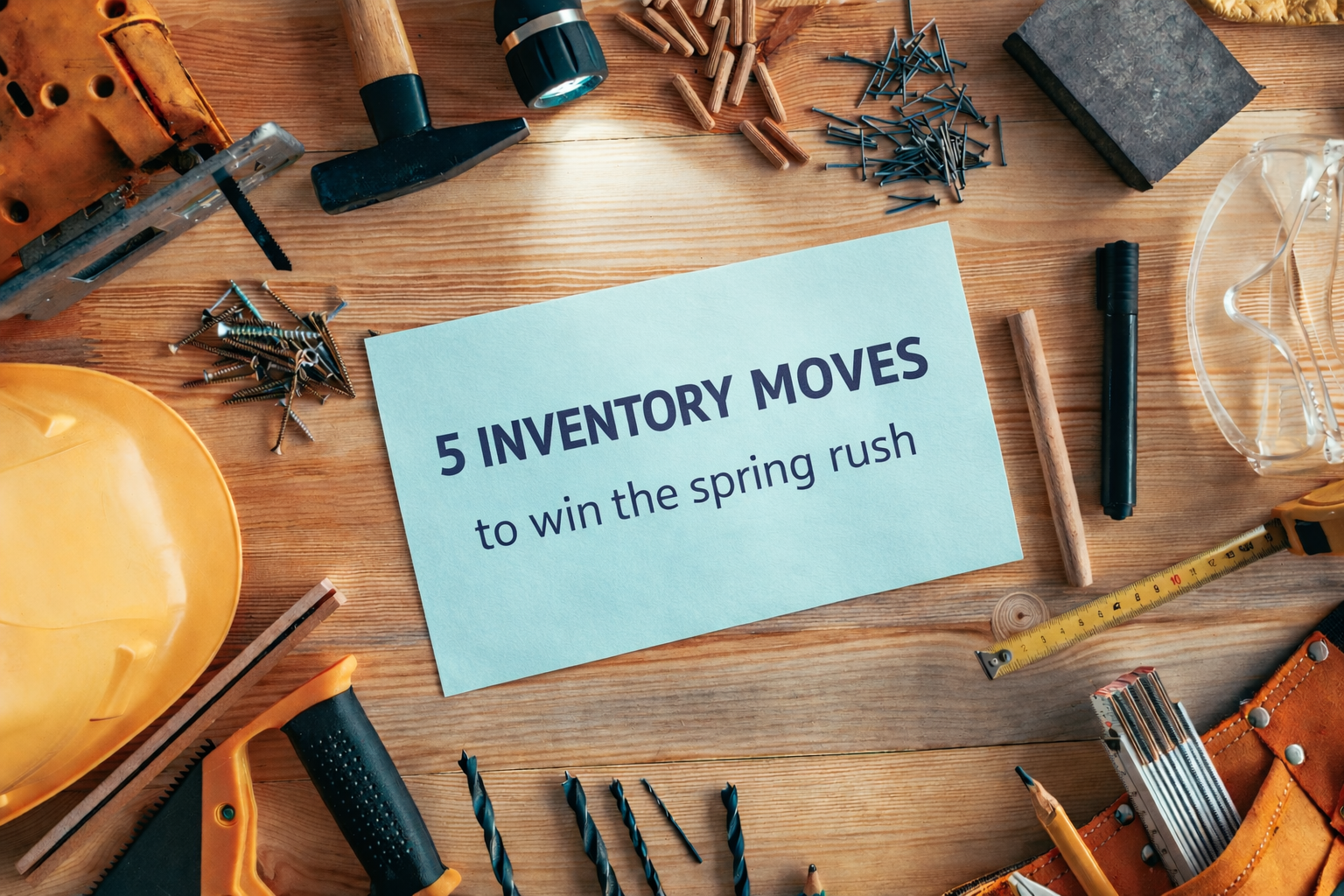
Spring Rush Ready: 5 Inventory Strategies for Contractors
Prepare for the spring rush with 5 essential inventory management strategies for field service contractors. Learn how real-time tracking, predictive analytics, and technology can boost efficiency and profits.
Ready to Modernize Your Field Operations?
FieldServ AI helps service companies streamline scheduling, dispatching, and customer management.
Get Started Free