
May Callback Scheduling: Field Service Management Software Stops $6K+ Revenue Loss
Contractors without field service management software lose $6K or more in May callback revenue. Here's what's breaking and how to fix it fast.
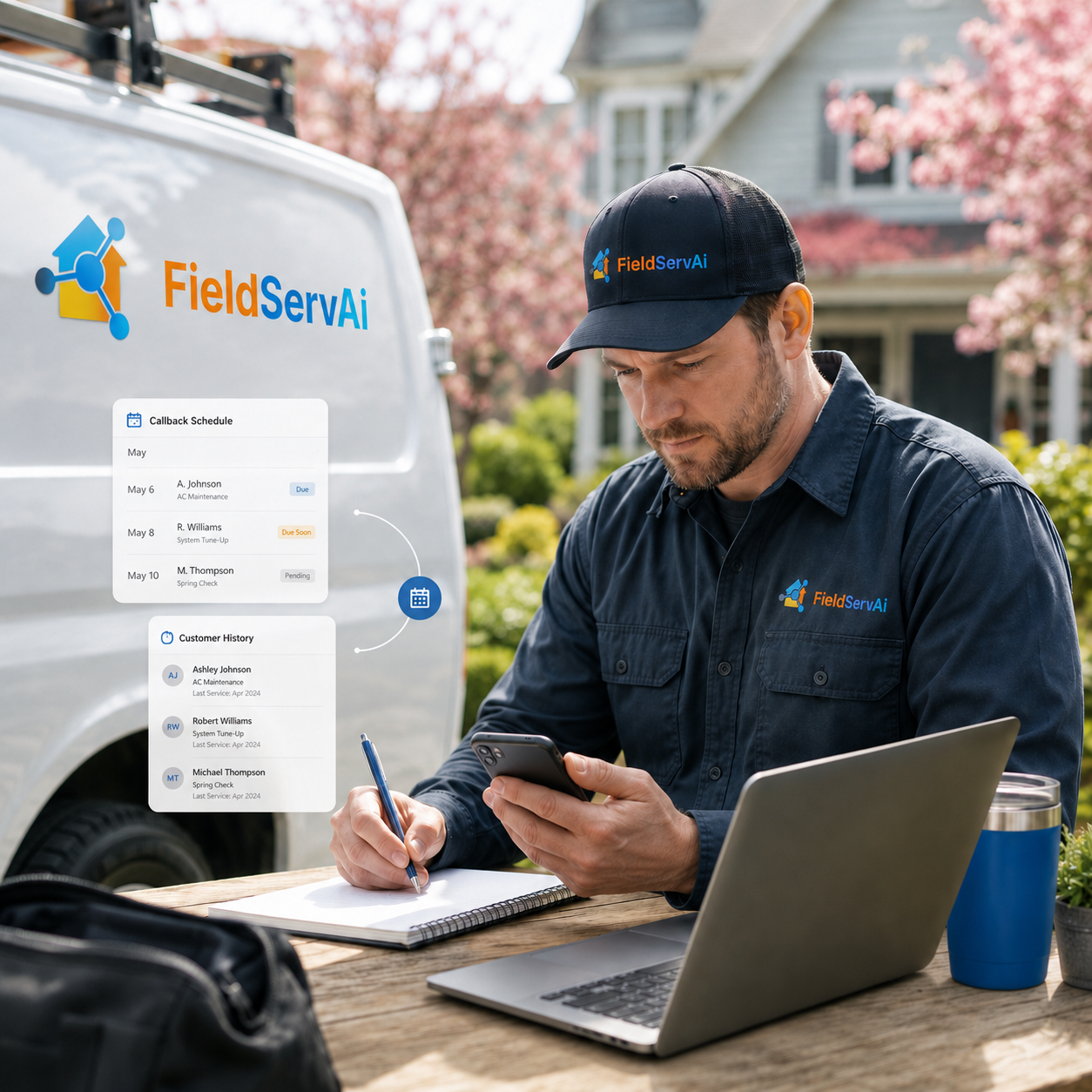
The May Callback Problem Nobody Talks About
Spring is prime earning season for contractors, but without field service management software, a silent revenue leak is draining your business every single May. We're talking about callback scheduling: those return visits, seasonal check-ins, and follow-up jobs that customers expect you to remember but that fall through the cracks when you're running on sticky notes and gut memory.
Think about your last busy season. How many customers told you, "Come back in the spring and check on that unit?" How many of those callbacks actually happened? If you're being honest, the number is probably lower than it should be. That gap between promised callbacks and completed jobs is where contractors quietly lose $6,000, $8,000, or more every single May.
According to CallBird AI, contractors can lose a conservative $45,000 to $250,000 annually in missed revenue opportunities, and callback failures are a major contributor. This isn't a hustle problem. It's a systems problem.
Why Manual Callback Systems Break Down Every Spring
Every contractor has their own version of the same story. You finished a big job in October, the customer loved you, and they said to come back in May for the seasonal tune-up. You wrote it on a notepad. Maybe you put it in your phone's calendar. Then March and April hit like a freight train, your schedule exploded, and that May callback never happened.
The customer didn't forget. They just called someone else.
Manual systems fail for predictable reasons. Here's what actually goes wrong:
- No centralized customer history: When job notes live in your head or scattered across apps, there's no trigger to remind you a callback is due.
- No automated follow-up: You're relying on yourself to remember dozens of callbacks while also running jobs, answering calls, and writing quotes.
- No visibility into the pipeline: You can't see which customers are approaching 90, 120, or 180 days since their last service without a proper field service CRM.
- Double-booked schedules during peak season: Even when you do remember a callback, squeezing it into a maxed-out May schedule causes more chaos.
- Missed upsell moments: Without job history, your techs show up blind and miss obvious upsell opportunities that a quick notes review would reveal.
This is exactly why platforms like FieldServAi are built around solving the callback gap with automation, scheduling intelligence, and customer history that travels with every job.
For a deeper look at how callback failures compound during busy months, check out The Callback Avalanche: 6 Field Service Management Software Features That Prevent $8K in Lost April Revenue. The patterns repeat every spring, and May is no exception.
What $6,000 in Lost Repeat Revenue Actually Looks Like
Six thousand dollars sounds abstract until you break it down. Let's make it real.
Imagine you have 40 customers from last fall who mentioned a spring callback. If even 15 of those jobs are worth $400 on average, that's $6,000 in repeat revenue sitting in a dead notepad. And that's a conservative estimate. HVAC contractors often see callback jobs run $500 to $1,200 when you factor in tune-ups, part replacements, and seasonal upgrades. Plumbing and electrical callbacks carry similar ticket averages.
The ripple effect goes even further. McKinsey research highlighted by ServicePower found that brands improving customer experience increase revenue by 10 to 15 percent and lower costs by 15 to 20 percent. Showing up for a promised callback is one of the simplest customer experience wins available to contractors. Failing to show up does the opposite: it damages trust, kills referrals, and hands your customers to your competitors.
There's also the utilization problem. The Technology Services Industry Association reports that the average field service organization operates at only 60 to 65 percent technician utilization, with nearly one-third of service calls requiring return visits. Callbacks you never schedule don't just cost you one job; they leave your crews underutilized when that revenue could be filling their days productively.
If you're still managing this on spreadsheets, read Field Service Software vs. Excel: 4 Costly Spring Mistakes before May gets away from you entirely.
How Field Service Management Software Fixes the Callback Gap
This is where the conversation shifts from frustrating to fixable. Good field service management software doesn't just store job notes. It actively works to bring customers back before you even think to reach out.
Here's what a modern field service app like FieldServ AI does differently:
- Automated follow-up sequences: When a job closes, the system can automatically schedule a follow-up touchpoint at 30, 60, or 90 days via SMS or email. No manual reminder needed.
- Complete customer history in the field: Every tech arrives knowing the full job history, what was promised, what was deferred, and what upsell opportunities exist. That context turns a callback into a higher-ticket visit.
- Smart scheduling with double-booking prevention: May is already packed. The system slots callbacks into your calendar intelligently, without creating the scheduling chaos that derails manual systems.
- Workflow automation for recurring service plans: Customers enrolled in maintenance plans never slip through. The system triggers their May appointments automatically.
- Pipeline dashboard visibility: You can see every pending callback, its estimated value, and its status at a glance. No more guessing what's in your pipeline.
- Missed call recovery: When a customer calls about their callback and you can't answer, an instant automated text response keeps them engaged so you don't lose the booking entirely.
The ROI guide from Repair-CRM notes that the typical payback period for field service software is 90 to 180 days, with first gains appearing within 30 days. For most contractors, a single recovered callback season pays for months of the subscription.
Whether you run hvac business software, plumbing business software, or manage a multi-trade crew, the callback automation logic is the same. You build the rule once, and the system does the work every season after that.
See the full automation suite at FieldServAi to understand just how many manual tasks you can eliminate before the summer rush hits.
Building a May Callback Strategy That Actually Sticks
Even with the right software in place, strategy matters. Automation amplifies a good process; it can't fix a broken one. Here's a practical framework for turning May callbacks into a reliable revenue stream.
Start with a customer audit. Pull every job completed between September and February. Flag any customer where a callback, tune-up, or follow-up was mentioned in the notes. If you've been using a contractor CRM software, this takes minutes. If you haven't, this is the hard-lesson year that changes that.
Segment by callback type. Not all callbacks are equal. Separate your list into: seasonal maintenance callbacks, deferred repair callbacks, and quote-follow-up callbacks. Each group gets a different message and priority window.
Set up your automated sequences before May 1st. This is critical. If you're still configuring your field service management software on May 10th, you've already lost two weeks of the prime callback window. Get the automation live in late April.
Train your techs to document callback promises in real time. Every time a tech closes a job and a customer says "come back in spring," that needs to be logged immediately in the field service app, not on a napkin. This is a culture shift, but it pays off in recovered revenue season after season.
For contractors thinking about pairing callbacks with longer-term agreements, May Maintenance Contracts: Field Service Management Software Stops Summer Revenue Collapse is worth reading alongside this piece. Recurring service plans and callback strategies work powerfully together.
Frequently Asked Questions About May Callback Scheduling
Q: How far in advance should I start scheduling May callbacks?
Ideally, you should begin outreach in mid-to-late April, at least two to three weeks before peak demand hits. This gives customers time to respond and lets you fill your May schedule intentionally rather than reactively. Software with automated outreach makes this easy to start early without adding to your workload.
Q: What if I don't have the customer history from last year because I didn't use software?
Start with what you have. Check your invoicing records, old texts, or email threads to rebuild a basic callback list. Then use this season as the clean-slate year to document everything properly in a field service CRM. Even a partial callback campaign will recover more revenue than doing nothing while you wait for a perfect dataset.
Q: Is field service management software worth it for solo operators?
Absolutely, and the case is even stronger for solo operators who have no admin team to catch what falls through. Myth Busted: Solo Contractors Need Field Service Management Software addresses this directly. Automation replaces the assistant you can't afford to hire.
Q: How does FieldServ AI handle callback scheduling specifically?
FieldServ AI combines automated follow-up workflows, a full customer history CRM, smart scheduling with conflict prevention, and SMS and email outreach into one platform. When a job closes, the system can automatically queue a callback reminder, send the customer a touchpoint message, and block time in the schedule when they confirm. You can explore the full feature set at FieldServAi.
Q: What metrics should I track to know if my callback strategy is working?
Track your callback conversion rate (promised callbacks vs. completed jobs), average ticket value on callback visits, and total callback revenue by month. If you want a broader view of what to measure this season, 3 Metrics Field Service Management Software Must Track in May is a practical starting point.
Stop leaving callback revenue on the table every spring. The system to capture it already exists, and it doesn't require more hours from you. It requires the right tools running in the background while you focus on the work. Contact Us at FieldServ AI today and find out how quickly you can have your May callback system up and running before the season passes you by.
Tags
Written by
FieldServ AI Team
Field service management insights from the FieldServAI team.
Related Articles
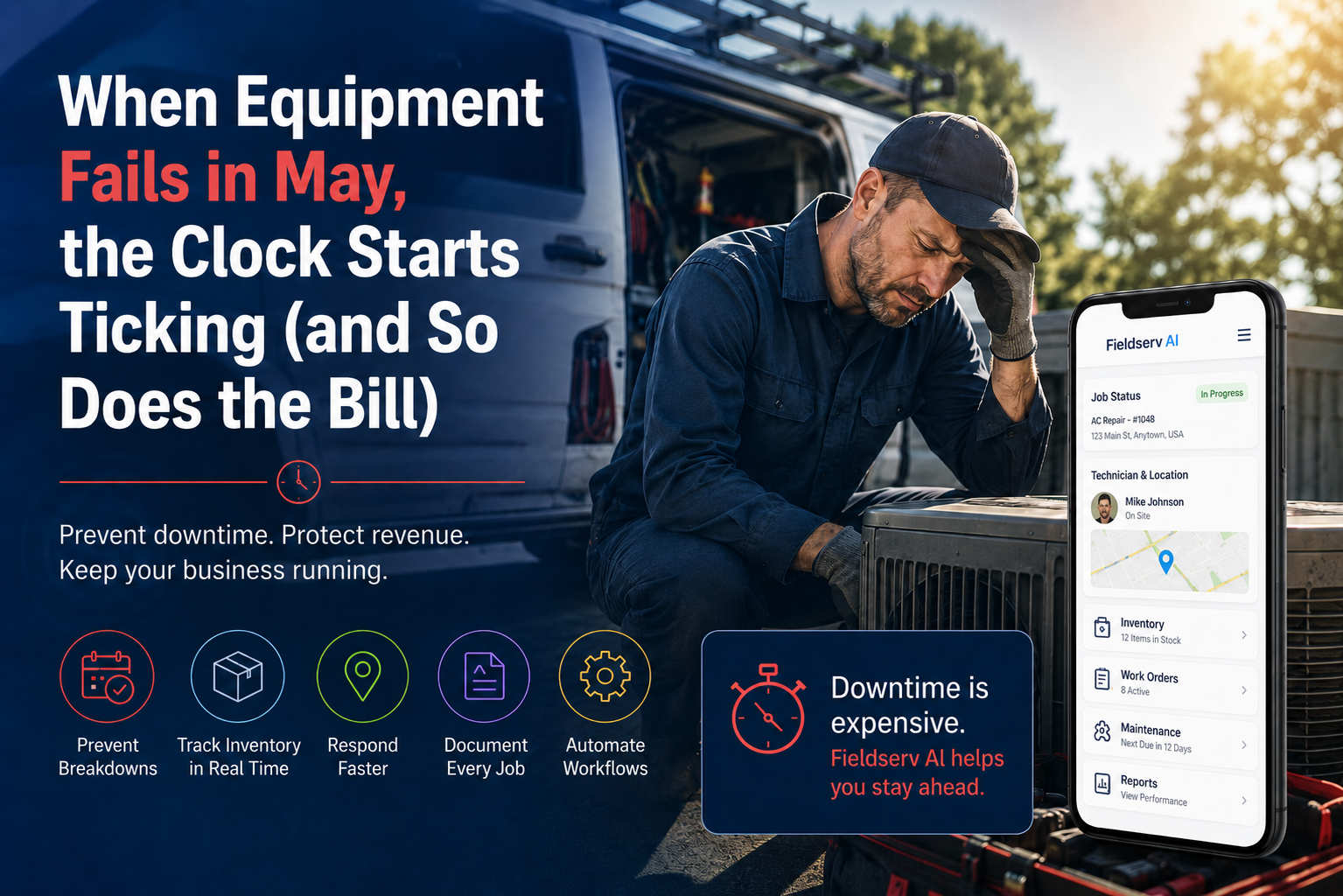
May Equipment Failures: Field Service Management Software Stops $10K+ Downtime
Equipment failures in May cost field service businesses thousands. Here are 5 ways field service management software stops the damage before it starts.
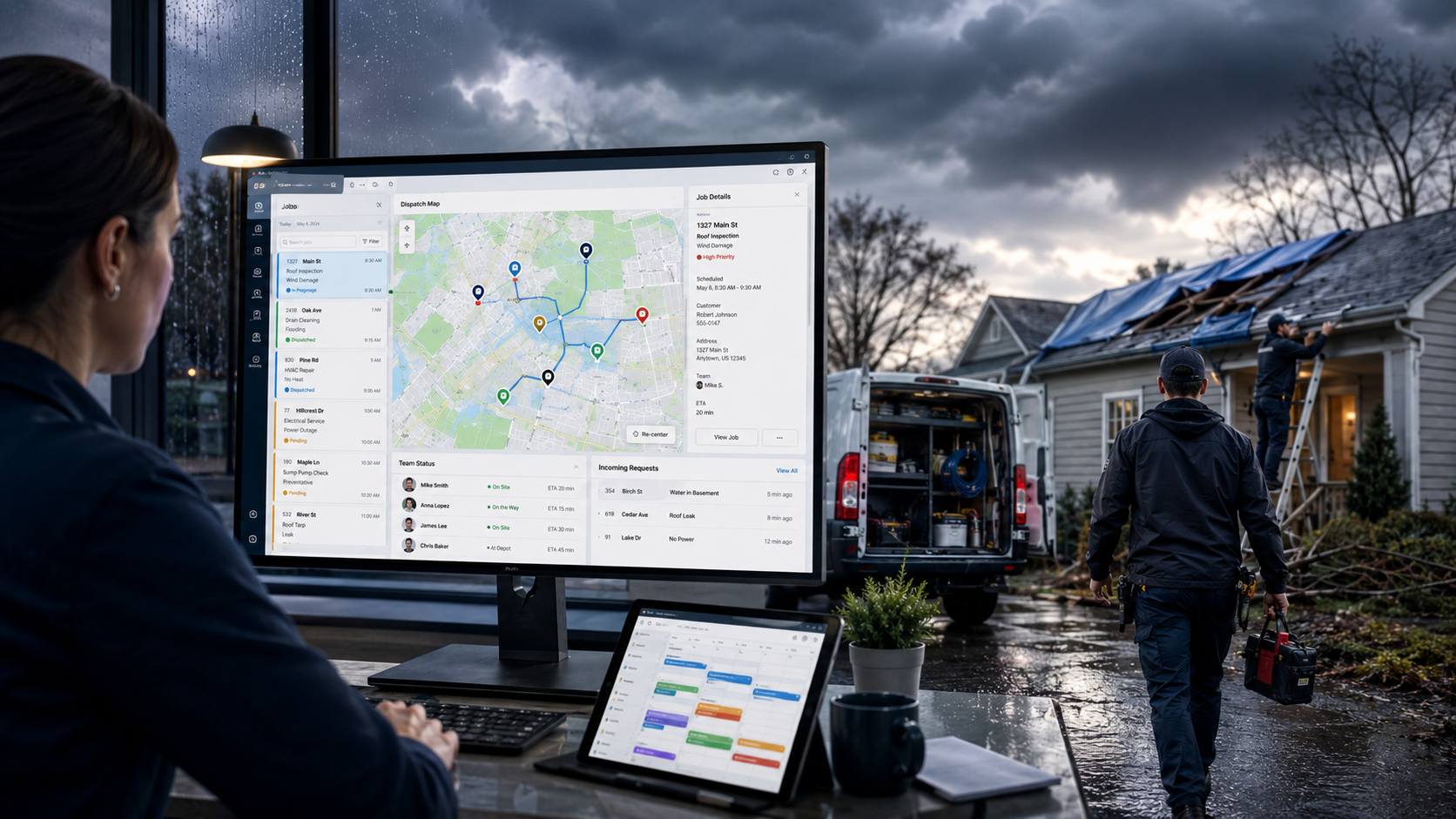
May Weather Emergencies: 7 Field Service Management Software Features That Prevent $10K+ in Missed Spring Storm Jobs
Spring storms create massive demand spikes. Discover 7 field service management software features that help contractors capture $10K+ in missed storm jobs.

May Invoice Delays: Field Service Management Software Fixes Slow Pay
May invoice delays are draining contractor cash flow. Learn why 82% of contractors wait 30+ days to get paid and how field service management software fixes it fast.
See FieldServ AI in Action
Get a personalized demo and see how AI-powered field service management can transform your business.
Book Your Demo