TL;DR:
FieldServ AI emerged from a simple but persistent frustration: contractors were juggling 5-7 disconnected apps just to complete a single job. Founded by Army veteran Sinuhe Montoya and field service expert Michael Dean—the same team behind LeadProspecting AI—the platform delivers mobile-first field service management that works where the work happens: in service vans, on rooftops, and in customer basements. With features built around real contractor workflows—smart scheduling, mobile quoting, offline capability, automated invoicing, and review collection—FieldServ AI helps service businesses eliminate administrative chaos while increasing completed jobs by 20-30%. Their mission: make field service technology actually serve the people in the field.
The Problem That Wouldn’t Stay Fixed
A plumbing contractor stands in a customer’s kitchen at 3:47 PM. The job is done. The customer is happy. But now comes the part he dreads.
He needs to take photos and upload them—that’s one app. Write up the work order—that’s a second app. Generate an invoice—third app. Process the payment—fourth app. Update the schedule for tomorrow—fifth app. And somehow remember to send a review request later—which he probably won’t.
By the time he gets back to his truck, he’s spent 25 minutes on administrative work that should have taken five. He still hasn’t logged his hours or updated dispatch on his availability. And there’s already a text from the office asking for the customer’s signature, which he forgot to collect because it lives in yet another system.
This wasn’t one contractor’s bad day. This was the reality for thousands of field service professionals across the country—HVAC technicians, electricians, roofers, landscapers, and every other trade where the actual work happens outside an office.
Sinuhe Montoya and Michael Dean saw this pattern everywhere. After building LeadProspecting AI to solve the lead management and customer communication crisis for small businesses, they kept hearing the same frustration from a specific subset of their clients: contractors who needed more than just CRM and marketing automation. They needed operational tools that worked in the field.
“We watched contractors succeed at capturing leads and communicating with customers,” Michael recalls, “but then struggle with everything that happened after the customer said yes. Scheduling was chaotic. Dispatching was manual. Technicians were drowning in disconnected apps. The job site experience was broken.”
The question became unavoidable: If we could solve lead management and customer communication, why couldn’t we solve field operations?
The answer became FieldServ AI. This is the FieldServ AI story—born from job site frustration, built on military discipline, and designed to make field service technology finally work for the people doing the actual work.
The Moment Everything Changed
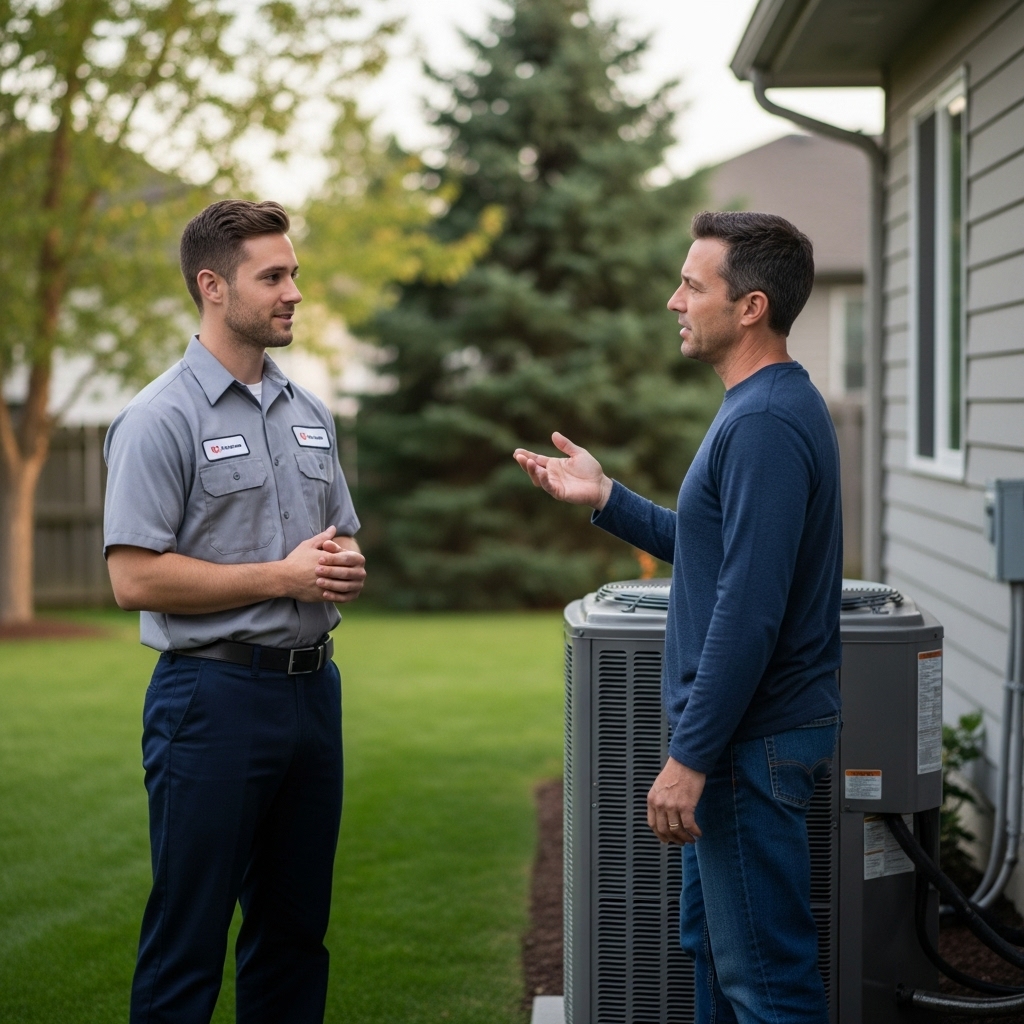
The turning point came during a conversation with an HVAC contractor in Twin Falls, Idaho.
He pulled out his phone and walked through his typical day. Seven different apps. Three separate logins just to complete one job. Customer information in one place, job history in another, photos scattered across his camera roll and a third-party app. His schedule lived in Google Calendar, but dispatch updates came through text messages that got buried under customer communications.
“I spend two hours every day just trying to keep all this stuff synchronized,” he said, visibly exhausted. “And I still forget things. I still miss follow-ups. My customers deserve better, but I don’t know what else to do.”
Sinuhe and Michael looked at each other. They’d heard variations of this complaint dozens of times, but this conversation crystallized something important.
The software industry had failed field service professionals.
CRM platforms were designed for desk workers. Field service management tools existed, but they were either enterprise-priced behemoths built for national companies with dedicated IT departments, or stripped-down scheduling apps that solved one problem while ignoring ten others.
Nobody had built what contractors actually needed: a mobile-first, affordable, comprehensive platform that treated field technicians like the skilled professionals they are.
“We realized the same principles that guided LeadProspecting AI applied here,” Sinuhe explains. “Small businesses shouldn’t have to choose between expensive enterprise software and piecing together free tools that don’t work together. There had to be a better way.”
The Military Foundation of a Field-First Philosophy
Sinuhe’s approach to solving complex problems didn’t start in business school. It started in combat zones.
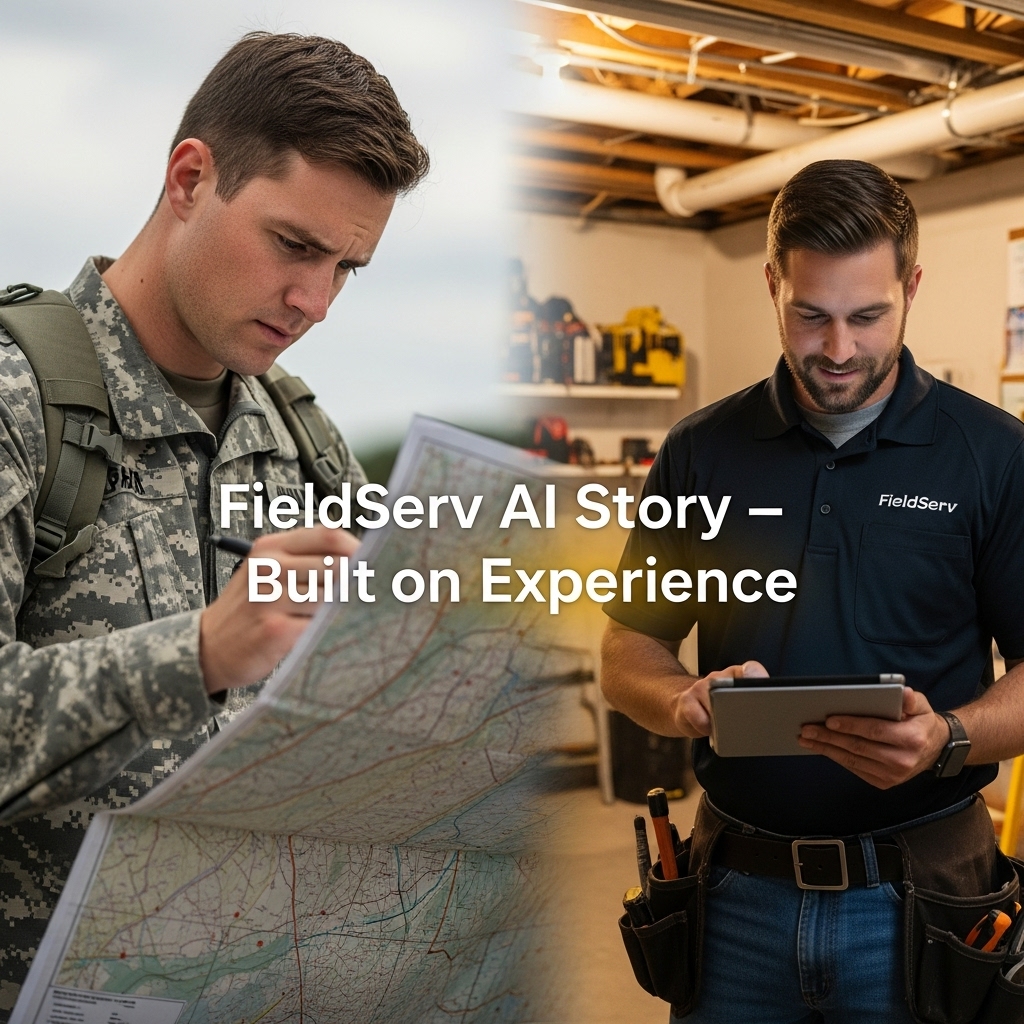
After serving ten years in the Army—including deployments to Iraq during intense urban warfare operations—Sinuhe carried forward a fundamental principle: systems fail when they’re designed by people who don’t understand the reality on the ground.
In military operations, you can’t build effective strategies sitting in an air-conditioned command center looking at maps. You need to understand what it’s like to execute those plans in 120-degree heat, with limited visibility, under active threat, when communications are spotty and backup is 20 minutes away.
Field service is obviously not combat. But the principle translates perfectly: you can’t build effective field service software sitting in a Silicon Valley office unless you understand what it’s like to use that software in a customer’s basement with dirty hands, limited time, spotty cell service, and a customer asking questions while you’re trying to work.
“Service before self isn’t just a military slogan,” Sinuhe says. “It’s a design philosophy. If we’re building tools for technicians, we need to build them around how technicians actually work—not how we think they should work.”
Michael brought the field experience that made this philosophy practical. After 12 years in construction, solar, and roofing industries, he’d worked alongside the people who would eventually use FieldServ AI. He knew what mattered on job sites: speed, simplicity, reliability, and tools that don’t require you to stop working to figure out how they function.
Together, they established three non-negotiable principles for FieldServ AI:
Mobile-first, not mobile-friendly. The platform had to be designed for phones and tablets from the ground up—not a desktop system awkwardly adapted for smaller screens.
Offline capability as standard, not optional. Technicians work in basements, rural areas, and commercial buildings where connectivity is unreliable. The software had to function seamlessly regardless of signal strength.
All-in-one by design, not through acquisitions. Every feature needed to work together naturally because it was built together, not cobbled together through purchasing other companies and forcing integration.
These principles guided every development decision that followed.
What We Built: Field Service Management That Actually Works in the Field
FieldServ AI isn’t just another scheduling app. It’s what happens when you eliminate the gap between “works on paper” and “works on job sites.”
The platform handles everything from the moment a job is scheduled through completion, payment, and review collection—all from the same mobile-first interface that technicians can navigate with one hand while standing on a ladder.
Here’s what’s included in one integrated system:
Smart Scheduling & Dispatch AI-powered scheduling that considers technician skills, location, job duration estimates, traffic patterns, and customer preferences to create optimal routes. When an emergency call comes in at 2:00 PM, the system instantly identifies which technician can respond fastest without disrupting other scheduled appointments. Dispatchers spend minutes on what used to take hours of manual coordination.
Mobile Quoting & Invoicing Generate professional, branded estimates on-site with photos attached and itemized pricing. Customers can approve with a digital signature, and the quote converts instantly to an invoice. Payment processing is integrated, so technicians can collect payment via credit card or ACH before leaving the job site. Mobile field service apps reduce administrative time by 30% simply by eliminating the paperwork shuffle.
Complete Customer Profiles Every interaction, photo, invoice, service note, and communication lives in one customer record accessible to everyone on your team. Your technician arriving at a repeat customer’s home sees the full service history, previous technician notes, equipment details, and customer preferences—all without calling the office.
Offline Functionality That Actually Works Unlike platforms that claim mobile capability but break the moment cellular signal drops, FieldServ AI continues functioning normally in offline mode. Technicians can access job details, update work orders, capture photos, and collect signatures in basements or rural areas. Everything syncs automatically when connection returns.
Automated Communication Appointment confirmations, arrival notifications, and review requests send automatically based on job status. Customers receive professional updates without anyone manually sending texts or emails. This automation is what turns satisfied customers into five-star reviews that drive future business.
Real-Time Business Intelligence See exactly what’s happening across your operation: which technicians are where, what jobs are in progress, where bottlenecks exist, and how productivity compares week-over-week. Make data-driven decisions instead of managing by gut feel and hoping for the best.
The platform works for any trade that sends people to job sites: plumbing, HVAC, electrical, roofing, landscaping, pest control, cleaning services, handyman operations, and specialty contractors like window installers or pool maintenance.
If your business depends on technicians showing up, doing great work, getting paid, and earning positive reviews, FieldServ AI handles the operational complexity so you can focus on the actual service delivery.
The Results: What Happens When Technology Serves the Technician
The validation for FieldServ AI doesn’t come from feature lists or technical specifications. It comes from the contractors who implement it and discover what field service operations can feel like when technology actually helps instead of hinders.
Time Recovery That Feels Like Magic Contractors consistently report reclaiming 10-15 hours weekly that previously disappeared into administrative black holes. What used to require office staff manually coordinating schedules, creating invoices, chasing payments, and requesting reviews now happens automatically through systematic workflows.
One electrical contractor put it simply: “I used to spend Sunday evenings doing paperwork for the entire week. Now I spend Sunday evenings with my family. The work still gets done—it just doesn’t require me anymore.”
Capacity Increases Without Hiring When technicians complete jobs 20-30% faster because they’re not wrestling with five different apps, that recovered time becomes available job slots. A three-person crew completing 24 jobs weekly suddenly has capacity for 30-32 jobs without working longer hours or hiring additional technicians.
For small contractors operating on thin margins where every completed job matters, this capacity increase directly translates to revenue growth and improved profitability.
Customer Experience That Drives Reviews Professional appointment confirmations. Accurate arrival time estimates. On-site invoicing with immediate payment options. Automated review requests sent at the perfect moment. These aren’t just nice features—they’re the difference between three-star and five-star customer experiences.
Contractors using FieldServ AI’s review automation typically see 2-3x increases in online reviews within the first quarter. Those reviews create visibility that generates organic leads, reducing dependence on expensive advertising.
The Values: What Drives Every Development Decision
FieldServ AI operates on the same principles that guided LeadProspecting AI and, before that, guided military service:
Integrity Building features that contractors actually need, not features that sound impressive in marketing materials. When industry trends push toward unnecessary complexity, FieldServ AI stays focused on solving real problems with elegant simplicity.
Discipline Maintaining the same level of quality and attention across every aspect of the platform—from the most-used features to the edge cases that only affect 2% of users. Every contractor deserves software that works reliably, whether they’re on the starter plan or managing a 50-person operation.
Follow-Through Delivering on commitments made to users. If the team says a feature will launch, it launches. If a bug is reported, it gets fixed. If a contractor needs help implementing a workflow, they receive hands-on support—not a canned response directing them to generic documentation.
These values translate into practical support that extends beyond typical software vendors. Users receive ongoing education through written guides, video tutorials, and direct access to real people who understand field service operations.
“Our success depends entirely on contractor success,” Michael emphasizes. “When plumbers close more jobs, when HVAC companies increase their review counts, when electricians reclaim their evenings—that’s when we know we’re building the right thing.”
The Future: Where Field Service Technology Is Heading
The roadmap for FieldServ AI centers on making field operations even more intelligent through thoughtful AI implementation.
AI-Powered Communication Assistance Upcoming features will help technicians communicate more clearly with customers through AI-suggested messaging that maintains professional tone while reflecting each contractor’s unique voice. Instead of staring at blank text fields wondering what to say, technicians get intelligent prompts that speed up customer updates without sacrificing authenticity.
Predictive Maintenance Scheduling The system will analyze service history patterns to identify when equipment is likely to need maintenance, enabling proactive scheduling that prevents emergency breakdowns. This transforms reactive service businesses into proactive relationship-based operations that customers value more highly.
Advanced Route Optimization Routing software already saves contractors hours weekly through geographic job clustering. The next generation will incorporate real-time traffic data, weather conditions, and historical job duration patterns to create even more efficient schedules that adapt dynamically throughout the day.
Content Generation from Job Documentation AI tools that automatically convert job site photos into social media posts, before-and-after showcases, and portfolio content. Great contractors do excellent work but struggle with marketing. FieldServ AI will help them effortlessly show their expertise to potential customers.
The long-term vision is straightforward: FieldServ AI will become the dominant platform for contractors who want enterprise capabilities at small business prices, backed by support that treats users as partners rather than account numbers.
This means continuing to democratize access to technology that large national chains have used for years to compete unfairly against local contractors. When small businesses have the same operational sophistication as corporate competitors, they win based on service quality and local relationships—advantages they’ve always had but couldn’t fully leverage without proper systems.
Your Invitation: Experience Field Service Software Built for Actual Field Service
If you’re still managing operations through text messages, scattered spreadsheets, and hoping your technicians remember to collect payment and request reviews, there’s a better way.
FieldServ AI represents what happens when military discipline meets field service experience and modern technology. It’s a platform built around how contractors actually work, priced for businesses that can’t afford enterprise software but refuse to accept amateur tools.
The transformation most contractors experience isn’t just about completing more jobs or generating more reviews—though both typically increase significantly. It’s about reclaiming time to focus on the skilled work you’re passionate about while automated systems handle the repetitive administrative tasks that used to consume your evenings and weekends.
Ready to see how mobile-first field service management could transform your operations? Explore FieldServ AI to learn how the platform handles everything from scheduling through payment collection, or dive into our comprehensive guide to field service software to understand what features actually matter for contractor success.
Your business deserves tools built for the field, not adapted from office software. Let’s build something great together.
Frequently Asked Questions
What is FieldServ AI and who is it built for? FieldServ AI is a mobile-first field service management platform designed for contractors and service businesses. It combines scheduling, dispatching, mobile quoting, invoicing, payment processing, and review automation into one integrated system. The platform serves plumbers, HVAC technicians, electricians, roofers, landscapers, cleaners, and any trade where technicians work on customer sites rather than in offices.
Who founded FieldServ AI and why? Sinuhe Montoya, a ten-year Army veteran, and Michael Dean, who spent 12 years in construction and field service industries, founded FieldServ AI after recognizing that contractors were struggling with disconnected operational tools. They built the platform to apply the same principles that guided their first company, LeadProspecting AI: deliver enterprise-level functionality at small business prices with genuine human support.
How is FieldServ AI different from other field service management software? FieldServ AI was built mobile-first from day one, meaning every feature works perfectly on phones and tablets where technicians actually use them. The platform includes comprehensive offline functionality for working in areas with poor connectivity, and integrates all operational needs—scheduling, invoicing, payments, customer management—without requiring multiple subscriptions or complex integrations.
What features does FieldServ AI include? The platform includes AI-powered scheduling and dispatch, mobile quoting and invoicing, integrated payment processing, complete customer relationship management, automated appointment reminders and review requests, offline capability for field work, real-time business intelligence dashboards, and photo documentation with automatic attachment to customer records.
How quickly can contractors see results after implementing FieldServ AI? Most contractors notice immediate improvements in workflow efficiency within the first week. Time savings of 10-15 hours weekly typically materialize within the first month as teams adapt to automated processes. Job capacity increases of 20-30% and review growth become apparent within 60-90 days as systems fully integrate into daily operations.
Does FieldServ AI work offline in areas with poor cell service? Yes—offline functionality is a core feature, not an afterthought. Technicians can access job details, update work orders, capture photos, collect signatures, and complete all essential tasks without cellular or WiFi connectivity. All data syncs automatically when connection is restored, ensuring nothing is lost.
What kind of support does FieldServ AI provide to contractors? Users receive comprehensive onboarding, ongoing training through guides and video tutorials, and direct access to real human support from people who understand field service operations. The team provides strategic guidance on optimizing workflows and growing operations, not just technical troubleshooting.
The Complete Business Growth Ecosystem
For contractors looking to build complete business systems that handle both operations and growth, Sinuhe and Michael also founded LeadProspecting AI—a CRM and marketing automation platform that captures leads, automates follow-up, manages customer communication, and drives review generation.
Together, FieldServ AI and LeadProspecting AI create a seamless system from first customer contact through service delivery and repeat business. Website visitors become scheduled jobs automatically. Completed jobs trigger immediate review requests. Satisfied customers receive systematic follow-up that generates referrals and repeat work.
Contractors using both platforms eliminate gaps where opportunities disappear, creating growth engines that compound over time through better operations, more reviews, higher visibility, and increasing customer lifetime value.
Explore how LeadProspecting AI complements FieldServ AI to build the complete business system your operation deserves.