TL;DR
A customer called Doulos Plumbing in Twin Falls with six words that changed everything: “Siri told me to call you.” This wasn’t luck—it was the result of strategic digital presence building: a well-optimized website, consistent blog content, active social media, and citation management across the web. This guide breaks down exactly what made that AI recommendation possible and gives you the actionable steps to earn the same visibility for your business.
When a Twin Falls homeowner’s pipe bursts at 2 AM, they’re not flipping through the Yellow Pages anymore. They’re asking their phone: “Best plumber near me for emergencies.” And increasingly, it’s not just Google answering—it’s ChatGPT, Claude, Perplexity, Siri, and Google’s AI Overviews.
If your business isn’t being recommended by these AI systems, you’re invisible to a growing segment of customers who trust AI answers as much as they trust a neighbor’s recommendation.
AI citations for small businesses are the new word-of-mouth. And Doulos Plumbing, a family-owned company serving Idaho’s Magic Valley, proved this in the most powerful way possible.
The Phone Call That Changed Everything
Josh from Doulos Plumbing answered the phone like he does dozens of times each week. But this call was different.
“Hi, I need a plumber,” the customer began. “I asked Siri to find someone near me, and she recommended you.”
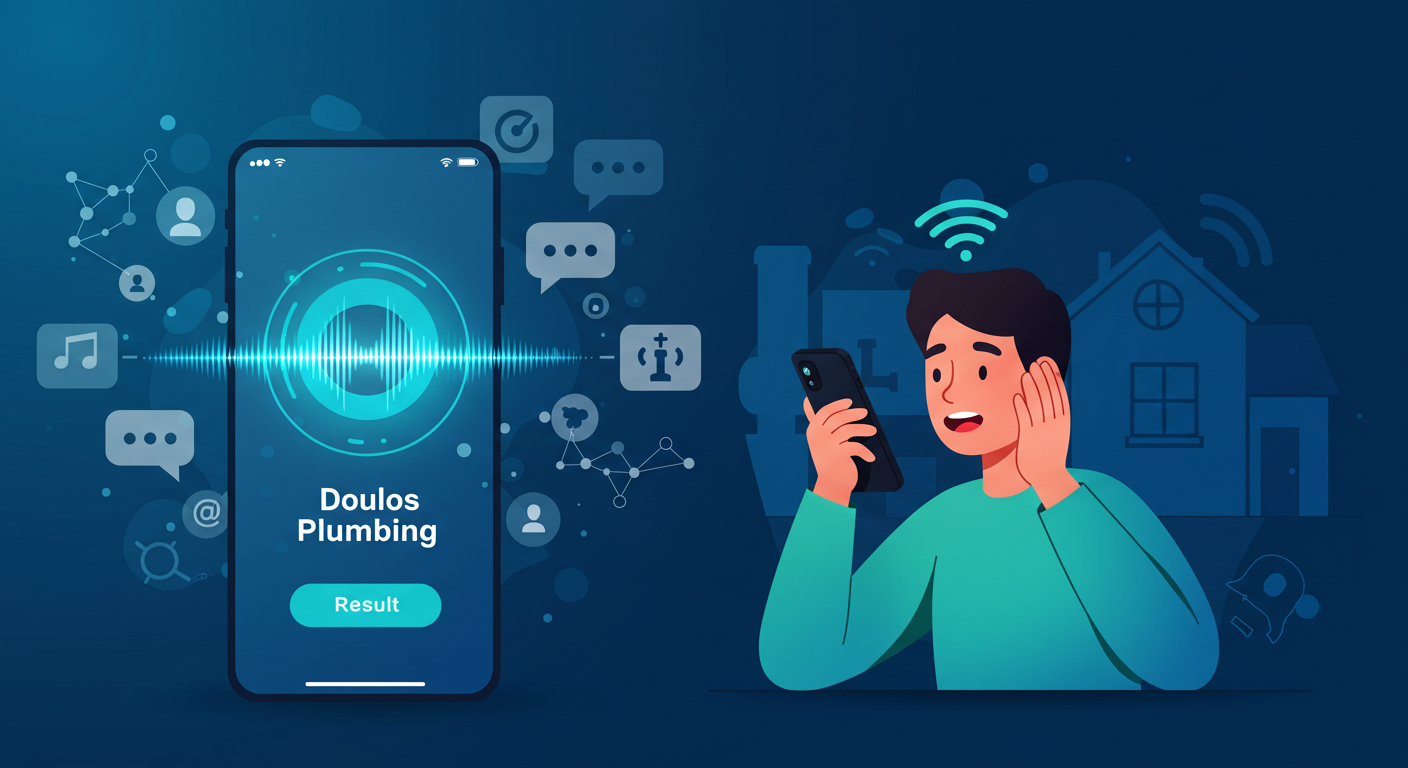
Not Google search results. Not a Facebook ad. Not a referral from a friend. Siri—Apple’s AI assistant—had proactively cited Doulos Plumbing by name as the answer to this customer’s need.
That moment crystallized something profound: the game had changed. AI assistants weren’t just finding websites anymore. They were making recommendations. They were becoming the trusted advisor that used to be a neighbor or family member.
And Doulos Plumbing had earned that recommendation through deliberate, strategic digital presence building.
Why AI Citations Are the New Local SEO
Let’s break down what happened in that phone call. When the customer asked Siri for a plumber, the AI assistant didn’t just return a list of links. It evaluated multiple signals—business listings, reviews, website content, social media presence, citation consistency—and determined that Doulos Plumbing was trustworthy enough to recommend by name.
This is what we mean by AI citations. When someone asks an AI assistant like Siri, ChatGPT, or Google’s AI Overview “who’s a reliable plumber in Twin Falls,” and your business name comes up in that answer—that’s an AI citation. It’s not just a link. It’s a recommendation, complete with implicit endorsement.
This matters because AI search visibility is rapidly becoming the primary way customers find services. A recent study found that 58% of consumers already trust AI-generated answers for local recommendations. That number climbs higher every month as voice search and AI assistants become the default way people find help.
For small businesses in Magic Valley and beyond, this represents a fundamental shift. Traditional SEO focused on ranking high in search results. AI citations mean your business is being actively recommended as the answer—not just one of many options to consider.
How Doulos Plumbing Built AI Citation Authority
Here’s what makes Doulos Plumbing’s story so instructive: they didn’t achieve that Siri recommendation by accident. They systematically built the digital foundation that AI systems reward. Here’s exactly what they did—and what you can replicate.
1. They Built a Website AI Systems Could Understand
Doulos’s website wasn’t just visually appealing—it was structured specifically for AI discovery:
Clear service descriptions with location markers. Every service page mentioned specific areas: “Emergency plumbing service in Twin Falls, Jerome, and Buhl.” AI systems need geographic specificity to match businesses to user locations.
Schema markup that tells AI exactly what they do. Structured data on their site explicitly tagged them as a plumbing business, listed their service areas, showed their hours, and included contact information in machine-readable format.
Fast loading speeds and mobile optimization. AI systems favor websites that provide good user experiences. Slow sites get penalized in AI recommendations just like they do in search rankings.
Real customer testimonials embedded on service pages. Not just a generic testimonials page—actual customer quotes integrated into relevant service descriptions, showing AI systems the connection between services and satisfaction.
2. They Published Strategic, Location-Specific Content
This was crucial. Doulos created blog content that answered real questions Magic Valley homeowners actually ask:
- “What Causes Frozen Pipes in Idaho Winters?” (geographic + seasonal relevance)
- “Signs Your Twin Falls Home Needs a Water Heater Replacement” (location + specific problem)
- “How to Know When Sewer Line Problems Require Professional Help” (expertise demonstration)
Each piece of content mentioned specific locations, addressed real local concerns, and demonstrated expertise. When AI systems crawl this content, they build a profile: “Doulos Plumbing = Twin Falls area expert in residential plumbing issues.”
The content wasn’t promotional—it was genuinely helpful. That’s what builds authority in AI systems.
3. They Established Citation Consistency Everywhere
One of the most important (and most overlooked) factors in AI recommendations is citation consistency. Doulos ensured their business name, address, and phone number (NAP) were identical across every platform:
- Google Business Profile
- Yelp
- Better Business Bureau
- Local Chamber of Commerce
- Industry directories
- Social media profiles
- Their website footer
Even small variations—”Doulos Plumbing LLC” vs “Doulos Plumbing” or slight address differences—create confusion for AI systems. Consistency builds confidence. When AI sees the same information across dozens of trusted sources, it signals legitimacy.
4. They Maintained an Active, Consistent Social Media Presence
Social signals matter more than many businesses realize. Doulos posted regularly on social platforms:
- Photos of completed jobs with location tags
- Customer testimonials and reviews
- Seasonal maintenance tips for Magic Valley homeowners
- Community involvement and local events
This wasn’t about going viral or getting thousands of followers. It was about creating consistent signals that they’re an active, engaged local business. AI systems factor social presence into their trust calculations.
5. They Gathered Keyword-Rich Reviews Strategically
After every job, Doulos encouraged satisfied customers to leave reviews. But here’s the key: they gently prompted customers to mention specifics.
Instead of generic five-star ratings saying “Great service!”, their reviews said things like:
- “Needed emergency plumbing in Twin Falls at 11 PM, and they came right out”
- “Best water heater installation experience we’ve had in Jerome”
- “Honest, reliable plumber for our rental properties in the Magic Valley”
Those location keywords and service specifics are exactly what AI systems look for when evaluating which businesses to recommend for specific queries.
What Small Businesses Can Learn from This Success
Doulos Plumbing’s approach to plumbing business marketing works because it’s built on fundamentals that any small business can implement:
Start with your Google Business Profile. This is non-negotiable. Claim it, verify it, complete every single field, add high-quality photos, post updates regularly, and respond to every review. AI systems heavily weight Google’s data when making recommendations.
Audit your online presence for consistency. Search for your business name and see what comes up. Are there old listings with outdated addresses? Variations in your business name? Phone numbers that don’t match? Fix every inconsistency you find. This is tedious work, but it’s foundational.
Create content around questions your customers actually ask. You don’t need a content marketing degree. Write down the ten questions customers ask you most often. Turn each one into a blog post. Include your city and service area in each post. That’s it. You’ve just built topical authority.
Be active on at least one social platform consistently. Pick whichever platform feels most natural—Facebook, Instagram, LinkedIn—and post twice a week. Job photos, tips, customer wins, community involvement. Keep it simple and consistent.
Make review collection systematic, not occasional. After every positive customer interaction, ask for a review. Send a text with a direct link. Make it easy. And gently mention: “We’d love to hear about your experience with [specific service] in [your city].”
The Role of Digital Presence for Contractors
Here’s something interesting: contractors—plumbers, HVAC techs, electricians, remodelers—are actually ahead of most industries when it comes to understanding digital presence for contractors.
Why? Because their customers have urgent needs. When your furnace dies in January or a pipe bursts, you need help immediately. That urgency has pushed contractors to meet customers where they are: on their phones, asking AI assistants for immediate recommendations.
The Doulos story perfectly illustrates this. The customer didn’t browse websites or compare quotes. She asked Siri for an answer, trusted that answer, and made the call. The entire customer journey took minutes.
Many Magic Valley contractors still rely primarily on word-of-mouth and truck decals. Those still work, but they’re incomplete. The homeowner asking their phone for help at 10 PM on a Sunday isn’t going to remember your truck from last week—they’re going to call whoever Siri or Google’s AI recommends.
The lesson for all small businesses: if a family-owned plumbing company in Buhl, Idaho can get cited by Siri, any business can build this kind of visibility with consistent effort and smart strategy.
Building AI Citations: Your Action Plan
Ready to get your business AI-ready? Here’s your practical roadmap based on what worked for Doulos:
Week 1: Foundation Audit
- Claim and fully optimize your Google Business Profile
- Search for your business online and document every listing you find
- Create a spreadsheet: Business Name, Address, Phone, Website—note every variation
- Begin correcting inconsistencies (this may take several weeks)
Week 2-4: Website Optimization
- Add location-specific keywords to your service pages
- Include your service area clearly on every relevant page
- Add schema markup (or hire someone to do this—it’s technical but critical)
- Ensure your site loads fast on mobile devices
- Add customer testimonials to service pages, not just a testimonials page
Month 2: Content Creation
- List the 10 questions customers ask you most frequently
- Write your first blog post answering one question (500-800 words)
- Include your city/region name naturally throughout
- Add photos from actual jobs in your area
- Commit to publishing one post every two weeks
Month 3: Social Media Consistency
- Choose one platform where your customers are
- Post twice per week: job photos, tips, testimonials, community involvement
- Always include location tags and your service area in captions
- Engage with local community pages and groups
Ongoing: Review Collection
- After every positive customer interaction, request a review
- Send a text with a direct link to your Google Business Profile
- Gently prompt: “We’d love to hear about your experience with [service] in [city]”
- Respond to every review within 48 hours
Monthly: Citation Maintenance
- Search for your business online monthly
- Correct any new inconsistencies that appear
- Update any changed information (hours, phone, services) everywhere simultaneously
These local SEO strategies compound over time. Doulos Plumbing worked with digital marketing partners, including LeadProspecting Ai, to implement these systematically. But the strategies themselves are accessible to any business willing to invest the time—or to work with partners who can execute them efficiently.
How AI-Driven Customer Discovery Actually Works
Understanding how AI-driven customer discovery works helps you optimize for it. Let’s break down what happened when that customer asked Siri for a plumber.
Step 1: The query. The customer asked Siri for a plumber near her location in the Magic Valley area.
Step 2: AI evaluation (happens in milliseconds). Siri’s AI evaluated multiple signals simultaneously:
- Citation consistency: Is this business listed the same way across multiple trusted sources?
- Geographic relevance: Does their digital presence clearly indicate they serve this specific area?
- Review quality and recency: Do they have recent, detailed reviews from real customers?
- Content authority: Have they published content demonstrating expertise?
- Website quality: Is their site professional, fast, secure, and mobile-friendly?
- Social proof: Do they have an active presence showing real work and engagement?
- Business legitimacy: How long have they been in business? Licensed and insured? Verified on Google?
Step 3: The recommendation. After evaluating all these signals, Siri determined that Doulos Plumbing had sufficient trust indicators to recommend by name—not just list as an option, but actively recommend.
Step 4: The action. The customer trusted Siri’s recommendation and called immediately. No website comparison, no quote shopping, no lengthy decision process.
This is the power of AI search visibility. When all the pieces align, your business becomes the obvious choice for AI to cite.
The Hidden Value: Customer Quality
Here’s something worth noting: customers who find you through AI recommendations tend to be higher quality leads.
Why? Because they’re not price shopping. They’re not calling ten different businesses for quotes. An AI assistant they trust told them “here’s who you should call,” and they called. There’s implicit pre-qualification that happens when AI makes a recommendation.
Traditional advertising casts a wide net and sorts through volume. AI citations work more like targeted referrals. The AI has already done vetting work—evaluating your legitimacy, proximity, and reputation before recommending you. The customer arrives with that recommendation already in mind.
For small businesses operating on thin margins, this distinction matters enormously. One AI-recommended customer may be worth five comparison shoppers in terms of conversion rate and project value.
Taking Action: From Strategy to Implementation
Doulos Plumbing’s journey from local plumber to Siri-recommended business didn’t happen overnight, but it also wasn’t complicated. They systematically implemented the strategies outlined above:
- Professional website optimized for AI discovery
- Valuable, location-specific content published consistently
- Active social media presence with local engagement
- Citation consistency maintained across all platforms
- Strategic review collection with location keywords
The result was a phone call that began with “Siri recommended you”—and the thousands of dollars in revenue that followed.
You can create the same result. The question isn’t whether AI citations matter—that customer calling Doulos proved they do. The question is whether you’ll build the foundation to earn those citations before your competitors do.
Start with one action item from the plan above this week. Claim your Google Business Profile. Audit your citations. Write one blog post. Post on social media twice. Small, consistent actions compound into the kind of authority that earns AI recommendations.
Need help implementing these strategies systematically? Tools like FieldServ Ai can automate review collection, customer follow-ups, and ongoing engagement. And if you need comprehensive support with website development, content creation, and digital strategy, partners like LeadProspecting AI specialize in building the foundations that earn AI citations. Because your expertise deserves to be found—and recommended.
FAQs About AI Citations for Local Businesses
What are AI citations for small businesses?
AI citations are mentions and recommendations of your business by AI assistants like Siri, ChatGPT, Claude, Google’s AI Overviews, and Alexa. When someone asks these systems for a local recommendation, an AI citation means your business name appears in the answer as a trusted option—exactly what happened when Siri recommended Doulos Plumbing to a customer searching for a plumber.
How do AI citations help plumbers in Twin Falls get more customers?
When potential customers ask AI assistants “best plumber in Twin Falls” or “plumber near me,” businesses with strong citation signals, consistent online presence, and quality reviews become the recommended choice. AI recommendations convert at higher rates than traditional search because customers trust AI answers similarly to personal referrals.
Do AI search results replace Google rankings?
AI search complements traditional Google rankings rather than replacing them. AI-powered features (like Siri recommendations, Google’s AI Overviews, and ChatGPT search) often appear as the primary answer for voice queries and mobile searches, while traditional rankings remain important for desktop and detailed research. Building for both maximizes visibility.
How can contractors improve AI search visibility?
Focus on five core areas: citation consistency across all platforms, professional website optimization with schema markup, regular publication of location-specific content, active social media presence, and strategic review collection with location keywords. These fundamentals build the trust signals AI systems evaluate when making recommendations.
Are online business citations the same as local SEO?
Online business citations are a foundational component of local SEO. Citations refer specifically to mentions of your business NAP (name, address, phone number) across the web. Local SEO encompasses citations plus reviews, content, Google Business Profile optimization, social signals, and website quality—all working together to build the authority that earns AI recommendations.
Why is digital presence for contractors in Magic Valley so important?
Magic Valley customers increasingly start their contractor search with AI assistants and voice search, especially for urgent needs outside business hours. Without a strong digital presence, you’re invisible when potential customers ask Siri or Google for immediate help—often the exact moment they’re ready to hire.
Can AI-powered marketing replace traditional advertising?
AI-powered tools complement traditional marketing by automating time-consuming tasks like review requests, customer follow-ups, and citation management. Many successful contractors combine traditional methods (truck branding, networking) with digital strategies. The key is meeting customers wherever they search—whether that’s seeing your truck or asking Siri for recommendations.
What role do reviews play in AI-driven customer discovery?
Reviews are critical trust signals. AI systems evaluate review quantity, recency, detail, and keyword relevance when deciding which businesses to recommend. Detailed reviews mentioning specific services (“emergency plumbing in Twin Falls”) and positive outcomes carry significantly more weight than brief star ratings. Consistent review generation builds the trust signals AI assistants prioritize.
How fast can small businesses see results from AI citations?
Building AI citation authority typically takes 3-6 months of consistent effort. However, businesses often see incremental improvements within weeks as citation inconsistencies get fixed, content gets published, and reviews accumulate. The key is consistency—small, regular actions compound into the kind of authority that earns AI recommendations.
What’s the best way for a Twin Falls small business to start with AI citations?
Start with three immediate actions: (1) Claim and fully optimize your Google Business Profile, (2) Audit all your online listings for NAP consistency and correct any variations, (3) Ask your last three satisfied customers for reviews with gentle prompts to mention your service and location. These foundational steps begin building the signals AI systems evaluate when making recommendations.