TL;DR
Customer experience is now the #1 competitive battlefield—by 2025, 89% of businesses are expected to compete primarily on CX, surpassing traditional factors like product and price. Here’s what your customer experience strategy needs to include:
- Listen actively – Use feedback systems to understand what customers really want
- Personalize interactions – 88% of online shoppers prefer personalized experiences
- Go digital – Meet customers where they are with seamless online touchpoints
- Deliver consistently – Every interaction shapes your reputation
- Measure and improve – Track satisfaction, loyalty, and retention metrics
- Train your team – Empower everyone to create positive experiences
- Follow up – Maintain relationships beyond the initial transaction
Bottom line: 86% of buyers are willing to pay more for a better customer experience, and 52% will switch to a competitor after just one poor experience. For Twin Falls, Magic Valley, and small businesses everywhere, a strong customer experience strategy isn’t optional—it’s essential for survival and growth.
Price and product used to be enough. In 2025, customers stay loyal to businesses that give them the best experience.
Walk through any neighborhood in Twin Falls or across the Magic Valley, and you’ll see the same story playing out everywhere: customers have more choices than ever before. National chains compete with local contractors. Online services challenge brick-and-mortar businesses. Digital natives expect seamless interactions from every company they encounter.
In this landscape, what separates thriving businesses from struggling ones isn’t necessarily the lowest price or the fanciest product—it’s the experience they create for their customers. Whether you’re running an HVAC company, a restaurant, a retail store, or a consulting firm, your customer experience strategy has become your biggest competitive advantage in business.
What Is a Customer Experience Strategy (and Why It Matters in 2025)
A customer experience strategy is your deliberate plan for how customers feel at every interaction with your business—from their first Google search to their final follow-up call.
Think of it as the difference between accidentally providing good service sometimes versus intentionally creating positive experiences every time. It connects your brand perception, builds trust, and creates the kind of loyalty that turns one-time customers into lifelong advocates.
The numbers tell the story: 80% of customers value their experience with a company as much as its products or services. For a Twin Falls contractor, this means how you handle scheduling, communicate during projects, and follow up afterward matters just as much as the quality of your actual work.
When you have a clear customer experience strategy, you’re not just hoping for satisfied customers—you’re systematically creating them.
How Great Experiences Drive Customer Loyalty and Retention
Here’s a reality check that will change how you think about customer relationships: loyal customers generate 12-18% more incremental revenue growth per year than non-members, and 87% of businesses say that investing in loyalty initiatives delivers a return on investment.
Customer loyalty and retention aren’t just nice-to-haves—they’re profit drivers.
Consider a local HVAC contractor in Twin Falls who not only fixes your heating system but also sends seasonal maintenance reminders, responds quickly to emergency calls, and remembers details from previous visits. When your system needs major work, who are you calling? When your neighbor asks for a recommendation, whose name comes up first?
Great experiences create emotional connections that transcend price comparisons. After a negative experience, loyal customers are 46% more likely to continue purchasing from a brand, while new customers will walk away after a single disappointment.
This is why improving customer satisfaction should be a top priority for any business looking to grow sustainably rather than constantly chasing new customers.
Why Digital Customer Experience Can’t Be Ignored
The customer journey no longer starts with a phone call—it begins with a Google search, continues on your website, moves through online reviews, and might include social media interactions before anyone ever speaks to your team.
For Idaho small businesses competing against national brands with massive marketing budgets, digital customer experience levels the playing field. A responsive website, professional online presence, and seamless digital communications can make a local contractor feel just as trustworthy as a corporate chain.
Your digital touchpoints include:
- Website experience: How quickly it loads, how easy it is to navigate, whether it works on mobile
- Online scheduling: Can customers book appointments without playing phone tag?
- Communication: Email confirmations, text updates, digital invoices
- Review management: How you respond to feedback on Google, Yelp, and Facebook
- Social media presence: Regular updates, behind-the-scenes content, community engagement
The businesses that master digital customer experience don’t necessarily have the biggest budgets—they have the smartest approach to meeting customers where they already are.
The Role of Personalized Customer Service in Building Trust
Personalization doesn’t mean expensive customization—it means remembering your customers as individuals rather than treating them as transactions.
88% of online shoppers are more likely to continue shopping on a retailer website that offers a personalized experience, and this principle applies whether you’re selling products online or providing services in person.
For a Twin Falls plumbing company, personalized customer service might look like:
- Using customers’ names in all communications
- Remembering their home’s specific plumbing quirks from previous visits
- Sending seasonal maintenance reminders based on their system type
- Following up after major repairs to ensure everything’s working properly
- Keeping notes about their preferences (preferred appointment times, communication methods, etc.)
These small touches build trust incrementally. When customers feel recognized and valued, they’re more likely to choose you again and recommend you to others. In small communities like those across the Magic Valley, this word-of-mouth reputation becomes invaluable.
Customer Feedback Management: Listening Is Your Superpower
Most businesses fear customer feedback. Smart businesses use it as their competitive advantage.
Customer feedback management isn’t about damage control—it’s about continuous improvement and showing customers that their opinions matter. In smaller communities where everyone knows everyone, being responsive to feedback becomes even more critical.
Effective feedback systems include:
- Post-service surveys: Quick, specific questions about the recent experience
- Review monitoring: Regular checking and responding to online reviews
- Follow-up calls: Personal check-ins after major projects or services
- Suggestion systems: Ways for customers to share improvement ideas
- Complaint resolution: Clear processes for handling and fixing problems
Magic Valley customers value being heard, especially in close-knit communities where relationships matter. When you actively seek feedback and visibly act on it, you’re not just improving your service—you’re demonstrating that you care about your customers’ experiences.
Service Excellence in Small Business: Standing Out Locally
Here’s where small businesses have a natural advantage: you can deliver faster, friendlier, more personal service than big chains ever could.
While corporate competitors make customers wait on hold for customer service hotlines, local Twin Falls contractors can answer calls directly. While national companies use generic scripts, local businesses can have real conversations. While big chains treat customers as numbers, small businesses can build genuine relationships.
Service excellence in small business means:
- Responsiveness: Answering calls quickly, returning messages promptly, showing up on time
- Reliability: Doing what you say you’ll do, when you say you’ll do it
- Accessibility: Being easy to reach and work with
- Local knowledge: Understanding the specific needs and preferences of your community
- Flexibility: Adapting your service to individual customer situations
- Accountability: Taking ownership when things go wrong and making them right
These advantages don’t cost extra money—they require intentional focus on customer relationships over transaction volume.
Pulling It All Together: Building a Customer Experience Strategy That Lasts
Creating a sustainable customer experience strategy isn’t about implementing every possible improvement at once—it’s about building a systematic approach that improves consistently over time.
Your customer experience strategy should follow this framework:
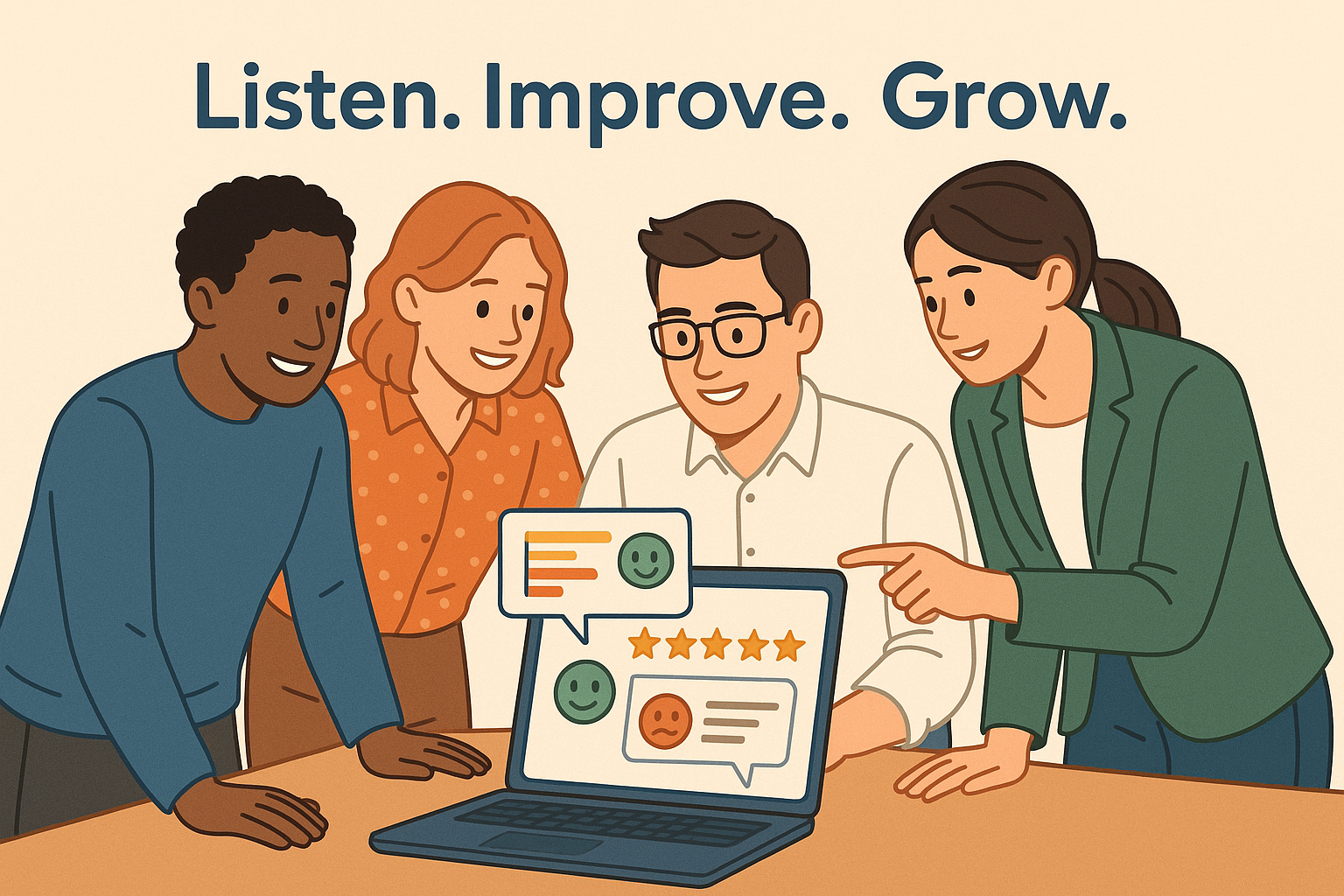
Listen: Establish feedback systems to understand what customers actually want and need, not what you think they want.
Personalize: Use customer information to make every interaction feel individual rather than generic.
Digitize: Meet customers where they are with professional online experiences that complement your in-person service.
Measure: Track key metrics like customer satisfaction, repeat business rates, and referral frequency.
Improve: Use data and feedback to continuously refine your approach.
Train: Ensure every team member understands their role in creating positive customer experiences.
Follow up: Maintain relationships beyond individual transactions to build long-term loyalty.
Remember: customers are willing to pay up to 16% more for a superior customer experience. This means your customer experience strategy isn’t just about retention—it’s about profitability.
Complete Your Growth Strategy: Exceptional Service + Smart Operations
Building a strong customer experience strategy requires the right foundation. You can’t deliver consistent experiences if your operations are chaotic, and you can’t grow sustainably without systems that scale with your success.
Ready to build operational excellence that supports exceptional customer experiences? FieldServ AI helps field service businesses create the systematic approach needed for consistent service delivery. From intelligent scheduling to real-time customer updates, their platform ensures your operations never let down your customer experience goals.
Want to amplify your customer experience with professional digital presence? Our partner LeadProspecting AI specializes in creating the digital touchpoints that modern customers expect—professional websites, automated follow-ups, online scheduling, and review management systems. Together, these platforms give you everything you need to deliver exceptional experiences while growing efficiently.
FAQ – Customer Experience and Competitive Advantage
What is a customer experience strategy, and why is it important?
A customer experience strategy is your deliberate plan for creating positive interactions at every touchpoint with your business. It’s important because customers now value experience as much as product quality, and it directly impacts loyalty, referrals, and profitability.
How can customer experience create a competitive advantage in business?
Exceptional customer experience differentiates you from competitors who focus only on price or product features. It creates emotional connections that make customers less likely to switch, more willing to pay premium prices, and more likely to refer others.
What are examples of improving customer satisfaction in small businesses?
Simple improvements include faster response times, personalized communications, proactive follow-ups, easy online scheduling, professional digital presence, and systematic feedback collection. Small businesses can often implement these faster than large corporations.
Why is customer loyalty and retention linked to customer experience
Positive experiences create emotional connections that transcend price comparisons. Customers who feel valued and understood are more likely to return, spend more per transaction, and recommend your business to others.
How can digital customer experience improve sales
Digital touchpoints often represent customers’ first impressions of your business. Professional websites, easy online booking, automated confirmations, and responsive communication create trust and convenience that lead to more conversions and referrals.
What are the best tools for customer feedback management?
Effective feedback tools include post-service surveys, review monitoring systems, follow-up call schedules, online suggestion boxes, and complaint tracking systems. The key is making feedback easy to give and demonstrating that you act on what you learn.
How can personalized customer service increase referrals?
When customers feel recognized and valued as individuals, they’re more likely to share positive experiences with friends and family. Personalization creates memorable interactions that people want to talk about.
What does service excellence in small business look like?
Service excellence means being responsive, reliable, accessible, knowledgeable about local needs, flexible with individual requirements, and accountable when problems arise. Small businesses can deliver personal attention that large companies can’t match.
How can Twin Falls businesses improve customer experience without raising prices
Focus on communication improvements, response time optimization, digital presence enhancement, feedback systems, staff training, and follow-up processes. Many experience improvements cost time and attention rather than money.
What are the top customer experience tips for Magic Valley small businesses in 2025?
Prioritize digital presence, implement feedback systems, personalize communications, train staff on customer service skills, create efficient operations, maintain consistent follow-up processes, and leverage local community connections to build lasting relationships.